Picture waking up to the sound of waves, grabbing coffee, and strolling to the sand without thinking about yard work or exterior maintenance. If you are considering a simpler, lock‑and‑leave lifestyle without losing the Coronado beach feel, a Coronado Shores condo might be on your shortlist. The fit depends on your priorities: daily convenience, amenities, monthly costs, and how condo ownership works in this oceanfront community. In this guide, you will learn what changes when you downsize to the Shores, what the HOA structure means for you, how new California inspection rules affect older towers, typical cost ranges, and a practical due‑diligence checklist. Let’s dive in.
Life at Coronado Shores
Coronado Shores is a gated, oceanfront campus with 10 high‑rise towers and roughly 1,500 units built in the 1970s. The property fronts Coronado Beach and sits next to the Hotel del Coronado, with the village just steps away. Shared amenities and landscaping are managed by the campus L&R committee, while each tower operates as its own condominium association. You will also find on‑site security and a staffed doorperson or concierge presence. You can review the community’s background and structure on the official Coronado Shores site.
Lifestyle is the big draw. You get private beach access, multiple oceanfront pools and spas, tennis and pickleball courts, a staffed Beach Club and Roeder Pavilion, and a fitness club with spa and sauna. These features support a resort‑style, low‑maintenance routine. For an overview of amenities and services commonly handled by the campus, see the community’s services overview.
Location adds daily ease. You are near dining and errands in the village and typically about 10 minutes to downtown San Diego via the bridge and about 15 minutes to the airport, depending on traffic. Depending on the tower and exposure, views can include the Pacific, Glorietta Bay, the downtown skyline, or Point Loma. The official community page offers a helpful starting point for orientation.
Downsizing tradeoffs to expect
Space and storage
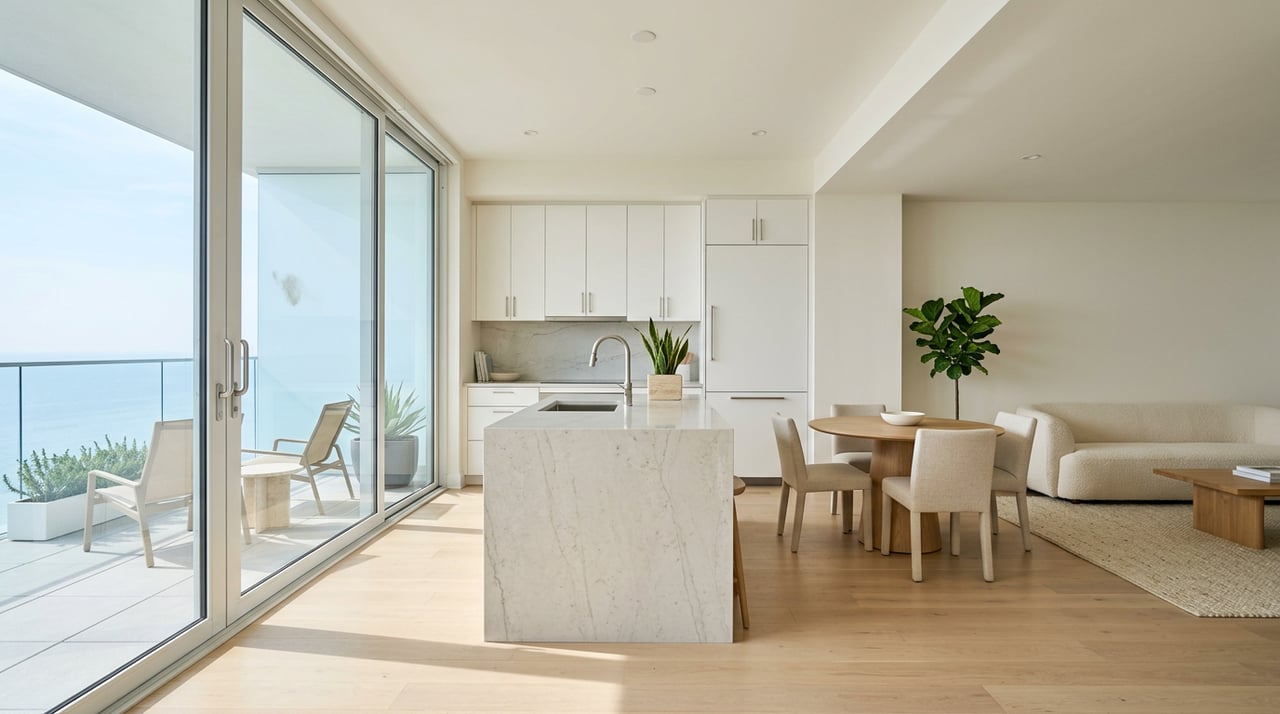
Most floors include a mix of studios, one‑bedrooms, two‑bedrooms, two‑bedrooms plus den, and three‑bedroom layouts. Even in larger condos, storage and garage capacity are usually tighter than in a single‑family home. Plan for a thoughtful edit of belongings and confirm whether your assigned parking is tandem or side‑by‑side, as that affects how easily you can come and go with two vehicles.
Maintenance and services
Monthly HOA assessments replace many owner tasks like landscaping, pool care, common‑area upkeep, building envelope maintenance, and campus security. This reduces hands‑on work and time commitments, but it does add a fixed monthly cost and ties outcomes to board and management decisions. For what is typically covered at the campus level, start with the services provided.
Community and social life
If you want activity without upkeep, the Beach Club, pools, fitness offerings, and on‑site events can provide a steady social rhythm. Being steps from Coronado’s restaurants and services means you can manage most errands on foot.
Accessibility and daily logistics
If aging‑in‑place matters, look for layouts near elevators, minimal thresholds, and easy access to parking and amenities. Ask about elevator reliability and any replacement schedule, since major capital projects can impact daily convenience and may come with special assessments. Plan to request the resale or estoppel packet early. It creates a snapshot of assessments owed and includes the documents you will want to review. For what an estoppel or resale certificate covers, see this plain‑English overview from a real estate law firm.
How the HOA works at the Shores
Two layers to review
Each tower is a separate HOA with its own board, CC&Rs, budget, and rules. The campus L&R committee functions like a master association that manages shared amenities. Before you commit, you should review both your tower’s governing documents and the L&R rules so you understand budgets, operations, and use rules. The community overview explains this structure at a high level.
Reserves and special‑assessment risk
California requires associations to complete reserve studies and make annual reserve disclosures. A weak reserve position or large deferred projects increases the chance of future special assessments. As a rule of thumb, industry guidance flags percent‑funded levels below roughly 60 percent as a heightened risk sign. Review the latest reserve study, the percent‑funded disclosure, and any planned capital projects. For context on reserve practices and disclosures, see this HOA reserve funding primer.
Rental rules you must confirm
Coronado’s municipal code sets a minimum transient occupancy threshold, which makes stays under 26 nights effectively prohibited in the city. Your tower’s CC&Rs can be stricter than city policy, with additional minimums or caps, so confirm both before you count on rental income. You can read the city’s rule in the Coronado municipal code.
Building age, safety, and SB 326
The Shores towers date to the 1970s and use steel and concrete construction typical of higher‑rise buildings. That helps avoid certain wood‑frame issues, but coastal exposure still demands vigilance for waterproofing and envelope maintenance. Balconies are a signature feature and a key item to evaluate for condition and prior repairs.
Under California’s SB 326, condominium associations must complete inspections of exterior elevated elements, incorporate findings into the reserve study, and repeat the process every nine years. The first condo deadlines fell on January 1, 2025. Ask whether your tower has completed the SB 326 inspection, what was found, and how repairs will be funded if work is needed. You can read the bill language directly in the SB 326 statute, and a practical explanation of balcony inspection requirements is summarized in this inspection FAQ.
What it costs each month
HOA dues
Public listings show a wide range of monthly assessments at the Shores, often in the four‑figure range on many units. It is common to see examples around the mid‑thousands per month, with some larger or premium locations higher and some smaller one‑bedroom stacks lower. Treat any published number as illustrative and confirm the exact amount for your unit. The resale packet should also specify what your dues cover, such as water, trash, security, hot water, common insurance, landscaping, and amenity operations. The services page offers context for campus‑level operations that dues typically support.
Insurance
The association carries a master insurance policy, but you will still need an HO‑6 condo policy. Your HO‑6 should address interior finishes and personal property, and it should include loss‑assessment coverage that can help with certain special assessments tied to deductibles or uncovered events on the master policy. For a concise overview of HO‑6 coverage, see this condo insurance guide.
Property taxes and other expenses
Expect California’s standard property‑tax framework, which is typically around 1 percent of assessed value plus voter‑approved bonds and assessments. Also factor in possible parking, move‑in, transfer, or document fees charged by the HOA.
Floorplans and views at a glance
Towers are generally about 15 stories and offer a mix of studios through three‑bedroom residences, with larger floorplans often at corners. As a reference point, El Mirador is a 15‑story tower with about 148 units, which gives you a sense of scale and density per building. You can see an example of tower‑level information on the El Mirador association site. Views depend on elevation and orientation and can include the Pacific, Glorietta Bay, downtown, or Point Loma. If you drive two cars, verify whether your assigned garage space is tandem or side‑by‑side, and ask about storage lockers if you need extra capacity.
A step‑by‑step due‑diligence checklist
Before you remove contingencies, request and review these items. Each one has a practical purpose in protecting your decision and budget.
- Resale or estoppel certificate: Confirms assessment status, transfer fees, and the document list you will receive. It creates an association‑verified snapshot of what is owed. Learn what an estoppel includes in this legal overview.
- Governing documents: CC&Rs, bylaws, rules, remodeling rules, and move‑in/move‑out procedures. Confirm rental minimums, pet rules, guest parking, and any owner‑occupancy requirements.
- Financials and reserves: Current operating budget, prior year financials, most recent reserve study, and the percent‑funded disclosure. Watch for large near‑term projects and recent assessment increases. For what to look for, review this reserve funding primer.
- SB 326 inspection report: Ask for the professional report, board minutes discussing findings, and any repair cost estimates or bids. See the SB 326 statute for requirements.
- Insurance summary: Master policy declarations and deductibles. This helps your insurer size HO‑6 dwelling coverage and loss‑assessment endorsements. Reference this HO‑6 guide.
- Board meeting minutes: Request the last 12 to 24 months. Look for repeated vendor turnover, deferred maintenance, litigation, or planned special assessments.
- Tower and L&R rules: Confirm guest parking, EV charging availability or approvals, storage policies, elevator reservation rules, and short‑term rental prohibitions.
- On‑site checks: Visit on weekdays and weekends, daytime and evening. Note any event noise from the Hotel del Coronado, tourist patterns, elevator wait times, concierge responsiveness, and the condition of lobbies, corridors, pools, and fitness spaces.
Negotiation tip: Build an HOA‑document review timeline into your contract. If the reserve study, SB 326 report, or minutes reveal pending large projects, consider negotiating a seller credit, holdback, or price adjustment to offset near‑term costs.
When a Shores condo may not be the right fit
- Reserve study is outdated or percent‑funded is well below roughly 60 percent, which can indicate higher special‑assessment risk. See this reserve funding overview.
- Board minutes show repeated vendor failures, litigation, or escalating maintenance backlogs.
- SB 326 inspections reveal widespread balcony or exterior element deterioration with large, unfunded repairs and no clear plan. Review the SB 326 statute for context.
- Your plan relies on short stays or frequent turnovers that conflict with the city’s 26‑night minimum and any stricter CC&Rs. See the Coronado municipal code.
Is a Coronado Shores condo the right downsize move?
If you want oceanfront access, a resort‑style amenity set, and a lock‑and‑leave routine, Coronado Shores delivers a compelling lifestyle. The tradeoffs are tighter storage, higher fixed monthly costs, and the need to understand how your tower HOA and the campus L&R committee manage reserves, projects, and rules. With the right due diligence, you can step into a simpler beach life while protecting your budget and peace of mind.
If you would like a personalized look at which towers, stacks, and exposures match your goals, reach out to The Morabito Real Estate Group. Our Coronado‑based team can walk you through unit‑level HOA documents, recent SB 326 and reserve findings, and current comps so you can decide with confidence.
FAQs
How does the Coronado Shores HOA structure work?
- Each tower is its own HOA with separate governing documents and budgets, and the campus L&R committee manages shared amenities, so you must review both sets of rules and financials; start with the community overview.
What HOA dues should I expect at Coronado Shores?
- Public listings often show four‑figure monthly dues, with many examples in the mid‑thousands and smaller stacks sometimes lower; confirm your exact amount and inclusions in the resale packet and the services provided at the campus level.
What is SB 326 and why does it matter for buyers?
- SB 326 requires HOA inspections of exterior elevated elements like balconies, with findings folded into the reserve study; ask if your tower completed the inspection and what repairs or funding are planned, and review the SB 326 statute.
Can I rent out a Coronado Shores condo?
- Coronado prohibits stays under 26 nights citywide, and your tower’s CC&Rs may be stricter; verify both the municipal code and HOA rules before relying on rental income, starting with the city’s occupancy rule.
What insurance do I need for a Coronado Shores condo?
- The HOA carries a master policy, but you still need an HO‑6 policy that covers interiors and personal property and includes loss‑assessment coverage; see this condo insurance guide for a quick primer.