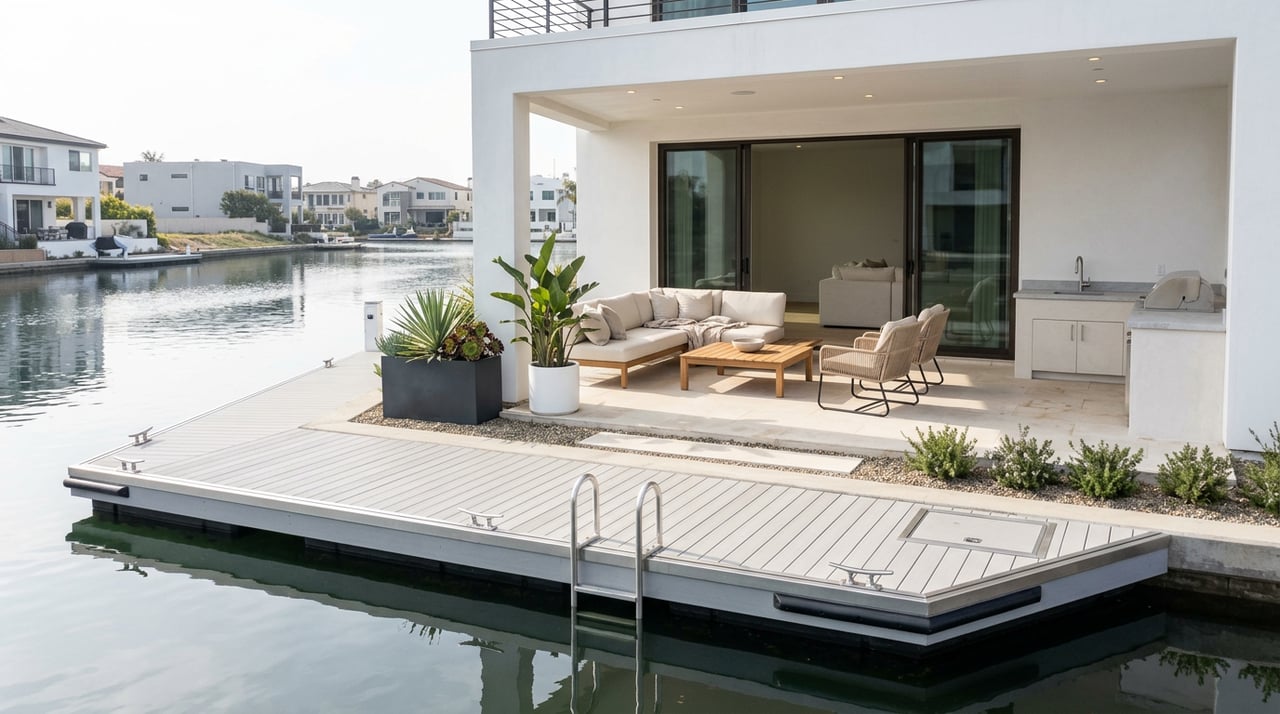
If your Coronado Cays home includes a slip, the dock is the star for many buyers. Serious boaters will judge your property by numbers, access, and paperwork long before they fall in love with the living room. You want to give them confidence fast. In this guide, you’ll learn exactly what to document, how to present it, and the marketing moves that attract qualified boating buyers. Let’s dive in.
Know your boating buyer priorities
Coronado Cays is a true residential marina with roughly 1,200 homes and more than 600 boat slips, according to the CCHOA. In a community like this, buyers screen listings by dock details first. The more precise you are, the stronger your position.
Lead with measured dock specs
Boating buyers want objective, verifiable numbers. Put these facts front and center:
- Slip length and usable beam, and where you measured from. If helpful, add boat fit guidance like “fits up to a 38' LOA,” only if verified.
- Water depth at low tide. State the depth at mean lower low water or the worst-case low, who measured it, and when. You can include a reference to NOAA tide predictions for San Diego Bay for context.
- Dock type and condition. Note fixed or floating, piling type, non-skid surface, cleats, fenders, gangway, and lighting.
- Lift or davits. Include capacity and maker if known. Flag whether approvals exist.
- Utilities at the dock. Shore power voltage and amperage, water, lighting, and pump-out access if applicable.
- Slip ownership model. Clarify deeded, limited common element, assigned by the association, or rental arrangement. Rules live in the CCHOA Member Handbook.
- Daily-use rules that affect buyers. Include a brief summary like “no liveaboards, 5 mph within 300 ft, no-wake, stern-to docking on bulkheads prohibited,” citing the handbook as your source.
Keep your language precise and neutral. Replace “dock included” with a clear, measured “30' slip, 11' usable beam, 7.5' depth at low tide, 30-amp shore power.”
Access and protection matter
Buyers care about the run time to open water and how protected the slip is from wind and chop. Note proximity to the main channel, canal fairway width, and nearby turning basins. If your slip sits near marked channel approaches identified by the HOA, call that out using the handbook as reference. For larger boats, confirm dredging or maintenance schedules with HOA docks staff before you publish. The CCHOA is your best starting point for community-level navigation context.
Community and services sell the lifestyle
You can strengthen buyer confidence by naming nearby resources boaters value: on-site dock support through the HOA, regional fuel and pump-out options, and the Coronado Cays Yacht Club as a social and boating hub. Keep tone informational and let the buyer picture their routine on the water.
Get approvals and paperwork right
In the Cays, permits and HOA approvals are not a formality. They are essential. Lenders and insurers often ask for them, and buyers will too.
Who governs docks and permits
Three layers apply to most structural dock work: HOA approvals through the Architectural & Environmental Control Committee, then state and federal clearances, then the City permit. The City of Coronado dock permits page outlines the sequence. Expect to show AECC approval, CEQA or Coastal Commission exemption or filing, and an Army Corps permit before the City issues a dock permit. Build that timeline into your plan if you need to regularize past work.
Confirm slip ownership status
Some slips are permanently assigned to certain units. Others are association-owned with rental or assignment policies. You cannot assume a slip can be sold or transferred separately. Verify status in title or HOA records, and cite the CCHOA Member Handbook when summarizing rules in your listing materials.
Flood and seawall information
Waterfront buyers often ask about seawall or bulkhead condition, elevation, and flood insurance implications. Gather recent seawall or engineer reports if available and provide FEMA map status and any elevation certificate for the parcel. Start with the City’s page on Coronado FEMA Flood Insurance Rate Maps. Keep your language factual and avoid making insurance guarantees.
Pre-listing tune-ups that pay off
Before photos and showings, address safety, function, and presentation on the dock. Your goal is to remove questions and project care.
Safety and condition first
Order a dock condition review that covers decking, fasteners, pilings, cleats, fendering, lighting, and handrails. Replace rotten planks, tighten hardware, and clean surfaces. The HOA requires docks to be maintained in a neat, safe, usable state, which aligns with buyer expectations documented in the CCHOA Member Handbook.
Lift servicing and disclosure
If you have a boat lift or davits, collect the last service record and capacity details. If paperwork is missing for an installed lift, disclose that up front and be ready to discuss a path to compliance. The City’s process for dock work, including lifts, is explained on the dock permits page.
Assemble a complete “dock packet”
Have these items ready for buyers and their lenders:
- Slip ownership or assignment documents from the HOA
- AECC approval letters for any dock, lift, or bulkhead work
- City dock permits and any Army Corps or Coastal filings
- Dock condition report and lift service records
- FEMA map status, any elevation certificate, and flood insurance history
- Proof of boat ownership and insurance if a boat is currently berthed under HOA rules
Market the dock with precision
With the facts collected, your marketing should make the dock impossible to overlook and simple to evaluate.
Photography and drone compliance
Commission four core visuals: high-resolution aerials that show canal context and approach to the bay, an approach shot from the water that shows pilings and fendering, close-ups of shore power and water, and a twilight image of the dock and patio to highlight lifestyle. For aerials used in marketing, hire a pilot who complies with FAA Part 107 guidance. Keep their certificate and insurance on file.
Listing copy that converts
- Lead with numbers, not adjectives. Put slip length, beam, depth at low tide, lift capacity, shore power voltage, and slip status in the first two lines.
- Be precise about access. If you time the run from slip to the main channel, share the verified figure and tide condition.
- Use photo captions to surface facts. A caption like “30' slip, 7.5' depth at low tide, 30-amp shore power” helps scanning buyers retain key details.
Channels that reach boaters
Promote to boating audiences where they are. Leverage local yacht clubs, including the Coronado Cays Yacht Club, marina-focused communities, and boating social groups. Short videos showing a real approach and docking sequence can reduce buyer uncertainty.
Sample “dock facts” block for your listing
Use this template to present your information clearly. Replace blanks with verified numbers and dates.
- Slip length and beam: __ ft length, __ ft usable beam (measured at __ on //__)
- Depth at low tide: __ ft at MLLW on //__ (measured by __); see NOAA tide predictions for San Diego Bay
- Dock type and hardware: __ dock, __ pilings, non-skid surface, __ cleats, fendering in place
- Shore power and water: __-amp __-volt power, dock water at pedestal, dock lighting
- Lift or davits: __-lb capacity __ brand; approvals on file: Yes/No
- Slip ownership: deeded / limited common element / association-assigned / rental (documents on file)
- HOA use rules summary: no liveaboards, 5 mph within 300 ft, no-wake, stern-to docking on bulkheads prohibited (per CCHOA Member Handbook)
- Access: approx. __ minutes to main channel at mid-tide; canal fairway width approx. __ ft
- Recent maintenance: dock condition report dated //; lift service dated //
Timeline and pitfalls to avoid
- Do not advertise a “permitted” dock or lift without the paperwork. The City requires the AECC approval and state or federal clearances before it issues a dock permit. Find the sequence on the City of Coronado dock permits page.
- Expect timelines to vary. Federal or state reviews can add weeks or months. Set buyer expectations early.
- Be careful with flood and insurance language. Share FEMA map status and any elevation certificate. Recommend that buyers consult their carrier for quotes.
Ready to sell your Cays home to boaters?
You get one chance to make a clean, confident first impression with boating buyers. When you pair measured dock data with verified approvals and premium marketing, you stand out in the Coronado Cays. If you want help gathering the right documents, presenting the dock, and reaching qualified boat owners, connect with The Morabito Real Estate Group for a tailored plan and timeline.
FAQs
What dock documents do Coronado Cays buyers expect to see?
- Buyers look for slip ownership or assignment records, AECC approval letters, City dock permits plus any required federal or Coastal filings, a recent dock condition report, lift service records, FEMA map status, and any elevation certificate.
How do dock permits work in Coronado for upgrades or replacements?
- The City outlines a sequence that starts with AECC approval, then CEQA or Coastal Commission review and an Army Corps permit, followed by the City dock permit; see the City’s guidance on dock permits.
How can I show low-tide depth at my slip with confidence?
- Hire a qualified professional to measure depth and state the datum, date, and method, then give buyers context by linking to NOAA tide predictions for San Diego Bay.
Are boat lifts allowed and transferrable in the Cays?
- Lifts require approvals and permits through the HOA’s AECC and the City, with federal or Coastal filings as applicable; confirm history before marketing a lift and be clear about whether approvals will transfer under HOA rules.
Who can berth a boat at an association dock in Coronado Cays?
- Docks are for noncommercial boats owned by Cays residents or property owners, with proof of ownership and adequate insurance required; liveaboards are not permitted under the CCHOA Member Handbook.
What wake and speed rules should I disclose to buyers?
- Motorboats must operate at a speed that creates no wake and not exceed 5 mph within 300 feet of residential property, and stern-to docking on bulkheads is prohibited; include a brief rules summary sourced to the handbook in your listing materials.