Shopping for a San Diego home and stuck on whether a condo, townhome, or PUD is right for you? You are not alone. These terms describe how you own the property and how the HOA works more than how the home looks. Once you understand the ownership differences, the costs, and local rules, your decision becomes much easier. In this guide, you will learn how each option works in California, what it means for your budget and lifestyle in San Diego, and what to check before you buy. Let’s dive in.
Condo, townhome, PUD: quick definitions
Condominium
In California, a condo owner typically owns the interior of the unit, often called the airspace, plus a shared interest in the common areas. The association usually maintains the exterior, roof, shared systems, and amenities. Many condos in California are governed by the Davis‑Stirling Common Interest Development Act, which sets rules for budgets, reserves, meetings, and disclosures. You can review the framework in the state’s civil code under the Davis‑Stirling Common Interest Development Act.
Townhome
Townhome describes a building style, not a single ownership type. In San Diego, a townhome can be legally structured as a condo or as fee simple where you own the lot and structure. Many townhome communities have an HOA for shared areas. To confirm which kind you are buying, review the legal description, recorded map, and CC&Rs.
Planned Unit Development (PUD)
A PUD typically means you own your home and the land under it in fee simple. An HOA manages shared roads, landscaping, and amenities like parks or gates. In a PUD, you might be responsible for the exterior and the roof, similar to a single‑family home, and the HOA’s role can be more limited than in a condo.
What you own and maintain
Ownership determines who pays for what. The listing label can be misleading, so rely on the recorded documents.
- Condos: You own the interior. The HOA usually handles exterior and structural upkeep, the roof, common utilities, and building insurance for common areas. Your policy often covers interior finishes and personal property.
- Fee‑simple townhomes and PUDs: You own the land and structure. You are often responsible for exterior, roof, and sometimes private patios and decks. The HOA maintains shared streets, gates, community landscaping, and amenities.
Always check the CC&Rs for details on balconies, patios, and window maintenance. Rules vary by community.
Costs to expect in San Diego
HOA dues and special assessments
- Condos often have higher monthly dues because the HOA covers exterior maintenance, building insurance, and shared amenities. Downtown high‑rise buildings with pools or gyms usually cost more.
- PUDs and many fee‑simple townhomes have lower dues since owners handle more of their own exterior work. The HOA focuses on common area maintenance and amenities.
- Any association can levy special assessments if reserves are low or big repairs arise. Review the reserve study, recent assessment history, and board minutes.
Property taxes and Mello‑Roos
California’s base property tax rate is about 1 percent, plus local voter‑approved assessments. In some master‑planned communities, Mello‑Roos bonds add a significant yearly cost. The tax rate does not change because a home is a condo, townhome, or PUD, but the total bill can vary with assessed value and special district charges.
Insurance basics
- Condos: You will likely need an HO‑6 policy for interior improvements, personal property, liability, and loss of use. Confirm whether the HOA’s master policy is bare walls‑in or all‑in, what the deductibles are, and any gaps.
- Fee‑simple townhome or PUD: You will likely need an HO‑3 or similar policy that covers the structure and exterior, plus liability and personal property.
- Earthquake coverage is separate in San Diego and is not typically part of the HOA master policy. Flood insurance may be required in mapped flood zones.
Financing and lender rules
FHA, VA, and conventional lending
- Condos: FHA and VA loans require project approval. If the project is not already approved, buyers may need to pursue single‑unit approval or use a different loan. You can learn more through HUD’s overview of FHA condominium project approval.
- PUDs and fee‑simple townhomes: These often avoid the condo project approval step, though lenders still review HOA health.
- Conventional loans: Lenders review the HOA’s reserves, budget, litigation status, owner‑occupancy levels, and assessment history. See the framework in Fannie Mae condo project standards.
Why it matters for you
Financing can affect your rate, closing timeline, and your ability to use certain loan programs. Projects with poor financials or active litigation can limit buyer options and reduce resale demand. Ask your lender to start any needed project approval early.
San Diego rules and realities
Short‑term rentals
The City of San Diego regulates short‑term rentals, and many HOAs have their own restrictions. If you are planning to rent your unit on platforms, check both the municipal rules and the CC&Rs. Start with the City of San Diego short‑term rental rules to understand permit types and enforcement.
Parking and storage
Downtown and urban condos may have limited parking, assigned spaces, or strict guest parking rules. Many suburban PUDs and townhome communities offer garages and driveways. Always verify assigned spaces, storage lockers, and any EV charging policies before you buy.
Safety and environmental hazards
- Earthquakes: Older multi‑family buildings may need seismic upgrades. Review building condition reports and planned retrofit projects, especially in older complexes.
- Wildfire: Parts of East County and North County sit in wildland‑urban interface zones. HOA landscaping rules and defensible space obligations may apply. Check San Diego County Fire Authority resources for local guidance.
- Flooding and coastal erosion: Coastal properties may be in flood zones or face bluff stability concerns. Review the FEMA Flood Map Service Center and consult California Coastal Commission guidance for coastal planning considerations.
Local planning and future development
Zoning and planned projects can influence privacy, traffic, and future views. If long‑term value matters to you, review City of San Diego planning maps and updates and ask about any upcoming roadway or mixed‑use projects near the community.
Where each option is common
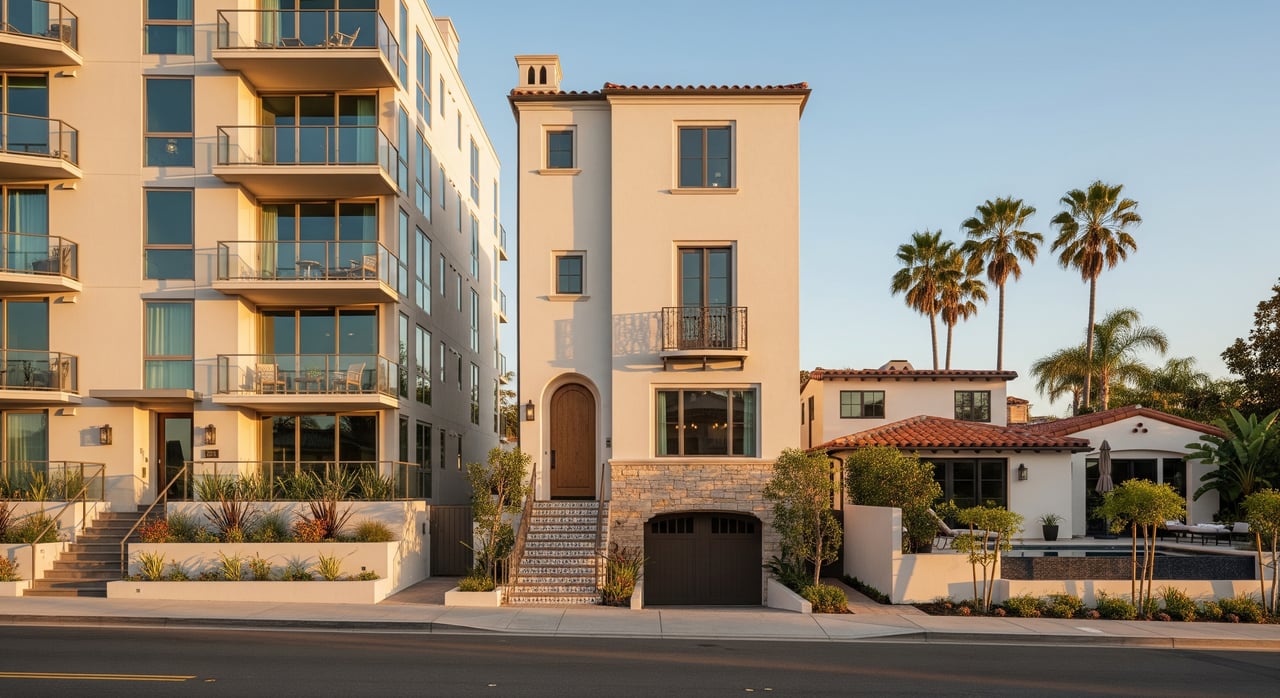
- Condos: You will see many mid‑rise and high‑rise condos in Downtown San Diego neighborhoods like the Marina District, Gaslamp, and Little Italy, along with pockets in Mission Valley and along the coast. These often attract buyers who want amenities, walkability, and lower‑maintenance living.
- Townhomes: Common in urban infill areas and newer neighborhoods, townhomes offer more space and privacy than many condos, often with garages and small outdoor areas.
- PUDs: Many suburban master‑planned communities in Scripps Ranch, Rancho Bernardo, Poway, and parts of North County are PUDs with shared parks, trails, and community centers. This structure can appeal if you want single‑family style ownership with community amenities.
Smart due diligence steps
Use this checklist during escrow so there are no surprises after closing.
- Ownership and legal: Confirm whether the home is a condo unit or fee‑simple lot by reviewing the deed, parcel map, and CC&Rs.
- HOA health: Request the latest budget, reserve study, income and expense statements, and the insurance declarations page. Check for special assessments, delinquency rates, and any pending litigation.
- Rules and use: Read the CC&Rs, bylaws, and house rules. Verify rental policies, including any caps and short‑term rental restrictions. Confirm pet policies, parking rights, and storage.
- Maintenance: Clarify who is responsible for the roof, exterior, balconies, and patios. Ask about any planned capital projects.
- Inspections: Order a home inspection. For fee‑simple townhomes and PUDs, consider roof and exterior evaluations. For condos, inspect interiors and balconies per the CC&Rs.
- Insurance fit: Match your personal policy to the HOA master coverage, including deductibles. Decide whether to add earthquake and, if needed, flood insurance.
- Financing: If using FHA or VA for condos, ask your lender to verify project approval early. For any loan, confirm lender project requirements and timelines.
Which choice fits your goals
- Choose a condo if you want low‑maintenance living and building amenities, and you are comfortable with higher monthly dues that cover exterior upkeep and shared spaces.
- Choose a townhome if you want more space and privacy than a typical condo, often with a garage, and you do not mind some exterior responsibilities.
- Choose a PUD if you want fee‑simple ownership that feels like a single‑family home with shared community features, and you prefer more control over your property and insurance.
If you are deciding between two similar listings, anchor your choice to the legal ownership, HOA health, insurance needs, and local rules that affect your day‑to‑day use and future resale.
Ready to compare real options in your target neighborhood or in Coronado and the coastal corridor? Let’s tailor this to your plans and budget. Connect with The Morabito Real Estate Group for a focused strategy and on‑the‑ground insight.
FAQs
What is the core difference between a condo and a PUD in San Diego?
- A condo owner typically owns the unit interior with shared rights to common areas, while a PUD owner usually holds fee‑simple title to the home and lot and shares only the community areas through the HOA.
How do I confirm if a San Diego townhome is fee simple or a condo?
- Review the legal description, recorded parcel map, and CC&Rs in the disclosure package, which will state whether you own a lot or a condo unit within a common interest development.
Do condos always have higher monthly HOA dues?
- Often, yes, because the HOA covers exterior maintenance, building insurance, and amenities, but actual dues vary by community size, age, and services, so compare budgets and reserve studies.
Can I use FHA or VA financing on a condo here?
- You can if the project meets agency requirements; check HUD’s guidance on FHA condominium project approval and ask your lender to verify the project early.
What insurance do I need for each property type?
- Condos usually require an HO‑6 policy for interior improvements and personal property; PUDs and fee‑simple townhomes typically need an HO‑3 or dwelling policy that covers the structure and exterior.
Are short‑term rentals allowed in San Diego condo or townhome communities?
- It depends on both city rules and the HOA’s CC&Rs; review the City of San Diego short‑term rental rules and the community’s rental policies before you buy.