Dreaming of a home where you can stroll to the sand in minutes? In Del Mar, that lifestyle is within reach, but beach access comes with unique rules, seasonal changes, and long-term coastal realities. If you understand how access works and what to check during due diligence, you can protect your investment and enjoy the beach with fewer surprises. This guide gives you a practical roadmap for evaluating access, hazards, and day-to-day convenience in Del Mar. Let’s dive in.
How beach access works
State rules you should know
California treats public shoreline access as a priority. The California Coastal Act sets policies that protect and maximize public access while balancing resource protection. The California Coastal Commission oversees these policies and reviews major coastal permits with cities that have certified Local Coastal Programs.
Under California’s public trust doctrine, the wet-sand area below the mean high tide line is generally public. Owning a beachfront or bluff-top home does not automatically confer exclusive use of the wet-sand beach. In many cases, there may also be recorded public access easements across or alongside private parcels.
Del Mar’s local program
Del Mar implements the Coastal Act through its Local Coastal Program and municipal regulations. These policies shape what can be built, where public access must be preserved, and when permits are required for shoreline protection. If a property involves a bluff, shoreline, or nearby public path, expect specific setbacks, conditions, or access protections to apply.
Shore-protection measures, such as seawalls and revetments, are often subject to strict scrutiny because they can affect public access and beach erosion patterns. Cities and the Coastal Commission can require public access easements as conditions of permitting or redevelopment.
Where and how you reach the sand
Access types in Del Mar
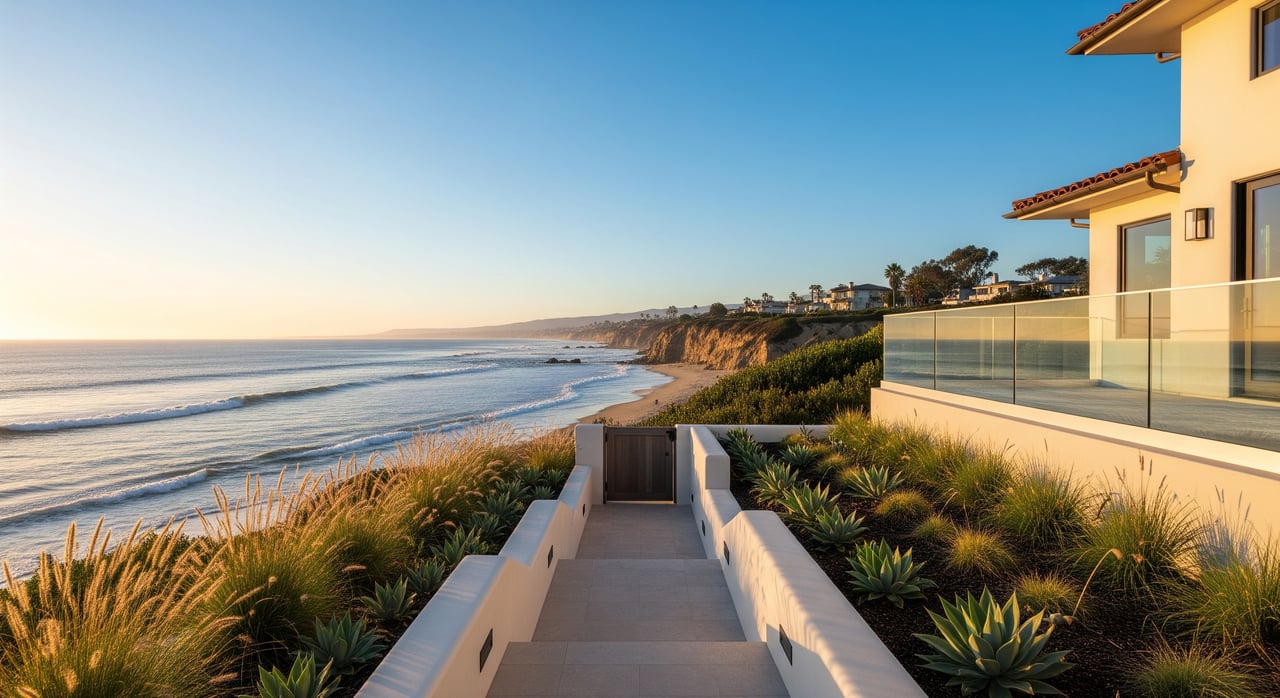
You will typically reach the beach via public stairways on the bluffs or streets that end at the shoreline. Del Mar also maintains parks and designated access sites, some of which have seasonal lifeguard coverage. Many neighborhoods offer short walking routes to the beach, though the presence of stairs or steep slopes varies by location.
Regional and state beaches just north and south of Del Mar influence parking and crowding. Peak seasons bring more visitors, so the nearest access point may feel different on a quiet weekday morning than on a warm summer weekend.
Practical constraints to plan for
Expect limited parking near popular access points. Much of the village area has metered or time-limited parking, and many stairways are designed for people who live or stay nearby and can walk or bike. If guest parking matters to you, confirm local street rules and limits.
Beach width and sand levels change by season and after storms. A wide, flat beach in summer can narrow considerably in winter. Access points can temporarily close due to events, repairs, storm damage, or lifeguard schedule changes, so it is wise to check local notices during peak weather and holiday periods.
Local ordinances regulate dogs, fires, alcohol, and nighttime use. Rules differ by jurisdiction and season, so always confirm Del Mar’s current ordinances if you plan regular beach time with pets or gatherings.
Walkability and mobility
Many Del Mar access points involve stairs. If you or your guests have mobility needs, note that ADA-compliant beach access is limited and generally only available at selected sites. Evaluate the slope, stair count, and distance from the property to the sand before you rely on any single route.
Coastal hazards and property impact
Bluff erosion and instability
Del Mar’s shoreline includes coastal bluffs that recede over time. Erosion and periodic bluff failures can affect both beach access and bluff-top structures. If you are considering a bluff-top home, factor in the current bluff edge, historical retreat patterns, and potential maintenance needs.
Sea-level rise and surge
Sea-level rise and storm surge can reduce beach width and increase flood risk in low-lying areas. Over the long term, these forces can alter access points and the usability of the sandy beach itself. Buyers should look at both near-term storm impacts and longer-term scenarios when weighing location and price.
Regulatory and insurance impacts
Because shoreline hardening can accelerate erosion elsewhere or constrain public access, new or replacement seawalls often face high regulatory hurdles. You should not assume that future armoring will be feasible. Substantial improvements or repairs to coastal properties typically require municipal permits and, in some cases, Coastal Commission review.
Properties near the coast may fall within FEMA Special Flood Hazard Areas. Lenders often require flood insurance in these zones, and premiums reflect mapped risk. Budget for potential higher insurance costs and longer permitting timelines for coastal work.
Value, lifestyle, and expectations
Homes with direct views and immediate access typically command a premium. That premium reflects both the lifestyle and the scarcity of close-to-sand locations. It also comes with added complexity, including stricter permitting, possible limits on future shoreline protection, and higher insurance or maintenance costs.
If resale is on your mind, remember that future buyers are considering sea-level-rise projections and access reliability too. A thoughtful due-diligence process today helps preserve value and enjoyment over time.
Your due-diligence checklist
Use this checklist to confirm access and reduce surprises before you commit:
- Title and easements
- Request a full title report. Look for recorded public access easements, rights-of-way, or deed restrictions. Confirm any lateral or vertical access that may affect privacy or use.
- Survey and property lines
- Obtain or verify a current survey that shows parcel boundaries, bluff lines, improvements, and any nearby public access points.
- Planning and permitting checks
- Contact the City of Del Mar Planning and Community Development to confirm zoning, setbacks, coastal bluff hazard status, and any past or pending code enforcement. Ask what permits would be required for future improvements.
- Flood, sea-level, and erosion risk
- Review FEMA flood maps for insurance and lender implications. Use sea-level-rise tools and, if necessary, commission a geotechnical evaluation to assess bluff stability and retreat rates.
- Insurance and lending
- Get quotes for homeowners and flood insurance. Verify lender requirements if the home is in a mapped flood zone.
- Utilities and maintenance responsibilities
- Clarify who maintains stairways, paths, or common areas. If the property is within an HOA, confirm budget, reserves, and any shared coastal maintenance obligations.
- HOA/CC&Rs
- Review rules regarding beach use, exterior modifications, guest parking, and any restrictions that affect access or repairs.
- Legal and coastal expertise
- For bluff-top or shoreline-front homes, consider speaking with a real estate attorney or coastal-permitting expert to understand limits on armoring, reconstruction, or redevelopment.
- On-site visits under different conditions
- Visit at high and low tide, after large swells or storms, and at different times of day and week to gauge beach width, crowding, parking, and noise.
Smart questions to ask on tours
- How far is the nearest public stairway or street-end access, and what is the stair count or slope like?
- Are there recorded access easements on or adjacent to the property that affect privacy or maintenance?
- Has the property undergone coastal permits or geotechnical studies, and what did they conclude about bluff stability or setbacks?
- Is the property in a FEMA flood zone, and if so, what are the estimated flood insurance costs and lender requirements?
- What are the current local rules on dogs, fires, and alcohol at nearby beaches, and how do they change seasonally?
- When are lifeguards typically on duty at the closest access point, and where are emergency access routes located?
Let’s plan your next step
If Del Mar’s beach lifestyle is your goal, a clear plan and the right local guidance make all the difference. Our team helps you evaluate access, permits, and risk so you can buy with confidence and enjoy the coast for years. Ready to talk strategy and see the right properties? Connect with The Morabito Real Estate Group for a tailored coastal home search and due-diligence roadmap.
FAQs
Is the beach in front of a Del Mar home private?
- In California, the wet sand below the mean high tide line is generally public, though bluff-top yards and decks can be private; verify any recorded easements and boundaries with a title report and survey.
Can I add or rebuild a seawall to protect a bluff-top home?
- Not automatically; shoreline armoring faces strict scrutiny and may be limited or infeasible, and substantial work typically requires municipal and possibly Coastal Commission permits.
How do tides and seasons change beach access in Del Mar?
- Sand levels and beach width can shrink after winter storms, and certain stairways or paths may be temporarily affected by weather, events, or maintenance.
What should I check before making an offer on a coastal property?
- Review title and easements, confirm zoning and hazard status with the city, assess flood and erosion risk, obtain insurance quotes, and visit the site at different tides and times.