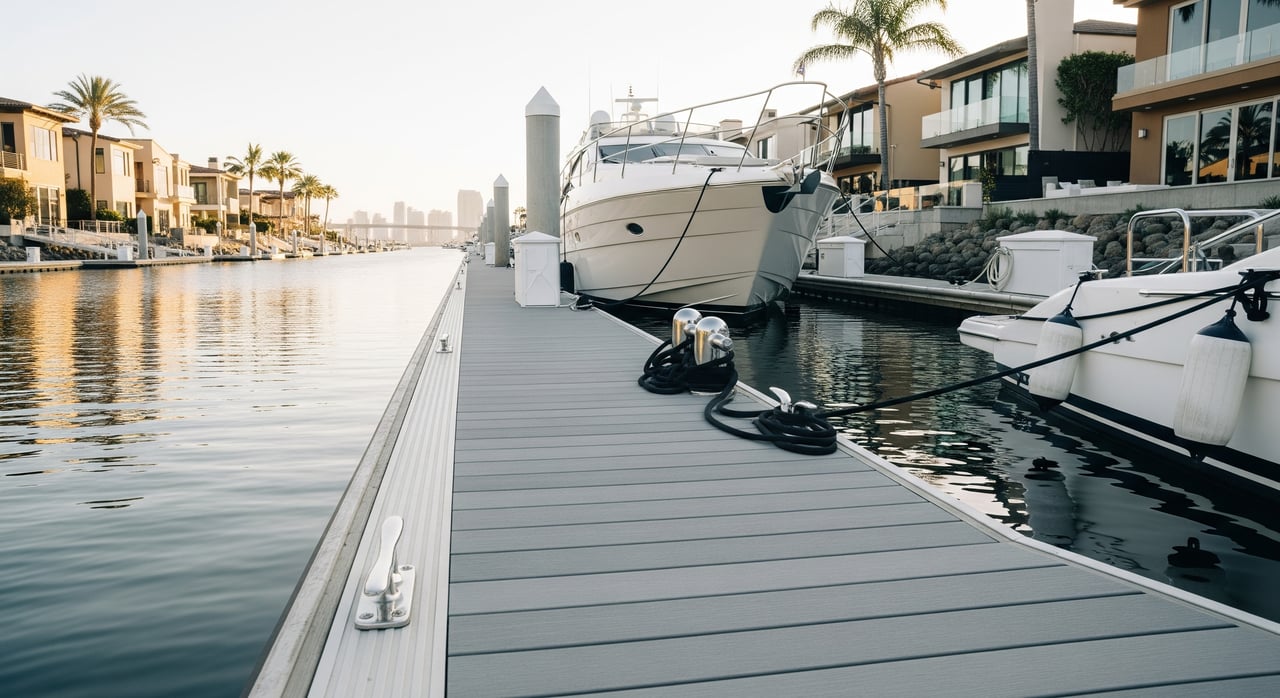
Picture yourself stepping from your Coronado Cays patio straight onto your boat for a quick cruise on San Diego Bay. It is a dream lifestyle, and it is also a technical purchase. Boat slips in the Cays come with specific rights, rules, costs, and maintenance responsibilities. If you understand them upfront, you can buy with confidence and enjoy the water from day one.
This guide breaks down how slip ownership works in Coronado Cays, what rules to review, the physical and cost factors that matter, and the due diligence that protects you in escrow. Let’s dive in.
How slips work in Coronado Cays
Coronado Cays is a planned waterfront community with private channels that connect to San Diego Bay. Slips are tied to homes, HOAs, or community facilities, and the exact arrangement depends on your property’s recorded documents.
Deeded, assigned, or leased?
- Deeded slips. Some homes include a deeded, permanently assigned slip that typically transfers with the property at sale. This is considered part of the real property unless documents say otherwise.
- HOA-assigned slips. The homeowners association may assign specific slips to owners under its CC&Rs and rules. Assignment terms and transfer procedures will be in the governing documents.
- Leased slips. Some slips are leased from the association or a third party for a set term. Leases often require HOA approval and can have renewal conditions.
Your financing, taxes, and long-term resale value can vary based on which model applies. Verify whether the slip is deeded real property or a license/lease during escrow.
Who manages and approves use?
Slip use is governed by recorded deeds, CC&Rs, bylaws, and rules. Expect policies covering boat size limits, guest use, storage, hours, and maintenance responsibilities. Many associations require an application, fee, and approval before a new owner or user can take possession of a slip.
When in doubt, start with the seller’s documents and the HOA. For city-level context, review the City of Coronado for planning, building, and relevant local rules.
Rules and restrictions to review
Clear rules make slip living predictable and safe. Before you write an offer, confirm the specific limits for the property you are considering.
CC&Rs and liveaboards
Many HOAs restrict or prohibit liveaboards. Confirm both the CC&Rs and any municipal or harbor rules that apply. Violations can lead to fines or loss of slip privileges.
Vessel size, guest access, and hours
Verify the permitted boat length, beam, and weight for your slip, along with guest and transient slip policies. If the community has a waiting list or blocks transfers under certain conditions, get those details in writing.
Insurance and enforcement
Most associations require boat liability insurance and may ask to be named as an additional insured. Expect enforcement for issues like improper storage, expired insurance, or noisy late-night activity. Ask for the recent violation history and fine schedule.
Physical fit: will your boat work?
Even a waterfront expert will tell you the same thing: physical compatibility is non-negotiable. Match your intended vessel to the exact slip and channel conditions before closing.
Slip size and configuration
Slips in the Cays vary by length and beam, and can be side-tie, berth, or floating dock. Confirm the measured usable length and approach angles from recorded documents. If you have a swim step, dinghy, or platform, include those in your measurements.
Depth, tides, and draft
Water depth at low tide sets the safe draft limit. San Diego’s tidal range is moderate, but localized shoaling or past dredge work can change effective depth. Ask for dredging history and consider a depth sounding at low tide. For tide timing and heights, consult NOAA Tides and Currents for San Diego Bay data.
Access, navigation, and security
Confirm the route from your slip to the bay, turning basins, and any air draft concerns. The Port oversees navigation and security on the bay, and there are restricted zones tied to military operations. Review guidance from the Port of San Diego and ask your HOA about any local restrictions. Also check gate access, dock lighting, and camera coverage, since security can impact insurance and peace of mind.
The true cost of a slip
A slip adds meaningful value and ongoing expenses. Ask for the full picture so your budget reflects reality.
Assessments and special assessments
HOAs often fund dock maintenance, channel upkeep, and dredging through regular assessments. Major projects can lead to special assessments. Request recent budgets, reserve studies, meeting minutes, and notices about planned work.
Utilities and repairs
Some slips include shore power, potable water, and lighting. Confirm what is installed, how utilities are metered, and any connection fees. Clarify who pays for and manages dock hardware, float replacement, pilings, and electrical upgrades. Lifecycle costs matter for long-term planning.
Taxes and transfer fees
If your slip is deeded real property, it may be part of the property tax assessment. Leased or licensed slips are typically treated differently. Expect possible transfer and application fees when slip rights change hands. Your escrow and title teams will need accurate legal descriptions and recorded documents.
Environmental and permitting factors
Waterfront ownership intersects with flood, environmental, and permit rules. Ask the right questions early to avoid delays.
Flood and sea-level risk
Coronado is low-lying, and parts of the Cays fall within FEMA flood zones. Verify the FEMA designation and, if available, an elevation certificate. The FEMA Flood Map Service Center is the best starting point for current maps and guidance.
Dredging and sedimentation
Private channels require periodic dredging to maintain depth. Find out who is responsible, how often dredging occurs, and how it is funded. Ask for vendor contracts and recent invoices to confirm scope and cost.
Permits for dock work
Dock repairs, reconstruction, and shoreline work may require local and state approvals. Depending on scope and location, you may need city permits and, in some cases, coastal or water-quality approvals. Start with the California Coastal Commission for shoreline permitting guidance and the San Diego Regional Water Quality Control Board for water-quality considerations. Your first call for local process questions should be the City of Coronado planning and building departments.
Pollution, waste, and pumpout rules
Discharge, fueling, and spill response are regulated. Confirm where you will access pumpout facilities and how the HOA enforces waste and storage rules. The Port sets bay-wide standards, so review current information from the Port of San Diego.
Financing and title clarity
How your slip is classified affects financing and title work. Sorting this out early keeps your transaction smooth.
How lenders view slips
Lenders generally include deeded slips in a standard mortgage if they are part of the real property. Leased or licensed slips are different and may require a separate marine loan or cash. Work with a lender experienced in waterfront purchases so your pre-approval reflects the property’s actual structure.
Title, escrow, and resale
Title companies need the correct legal description if the slip is deeded. For assigned or leased slips, escrow will review the governing documents to confirm assignability and conditions. Ask about any recorded easements, dredge agreements, or outstanding liens tied to dock work. At resale, clarity on slip rights, size, and maintenance history makes your property easier to market.
Buyer due-diligence checklist
Use this checklist to organize your escrow and reduce surprises:
Documents to obtain and review
- Recorded deed with legal description and any slip references.
- CC&Rs, bylaws, and rules from the HOA or sub-association.
- Slip assignment letter or lease agreement and transfer terms.
- HOA budgets, reserve studies, meeting minutes, and assessment notices.
- Recent invoices and contracts for dock maintenance, repairs, and dredging.
- Property tax records noting how the slip is assessed.
- Insurance requirements, including any additional insured language.
- Recorded easements and any dredge or utility access agreements.
Inspections and verifications
- Physical dock and float inspection for pilings, cleats, wiring, and structural integrity.
- Depth sounding at low tide and a chart review for hazards; verify maneuvering room.
- If possible, a boat maneuverability trial to test approach and clearance.
- Environmental check for fuel odors, staining, or signs of past spills.
Questions for the HOA or seller
- Who pays for dredging and how often is it scheduled?
- Any planned special assessments related to docks or channels?
- Vessel size/beam/weight limits and how they are enforced.
- Guest slip policies, waiting lists, or transfer blocks.
- Restrictions on engines, fuel storage, or maintenance work.
- Liveaboard rules and any sewage or bathroom requirements.
- Security measures and recent incident history.
Public and regulatory confirmations
- FEMA flood zone and any available elevation certificate.
- Bay navigation and restricted areas via the Port of San Diego.
- Local permit history for past dock or shoreline work through the City of Coronado.
- Tide and current patterns from NOAA Tides and Currents.
Lifestyle and day-to-day realities
Owning a slip steps up your lifestyle, but convenience comes from the details.
Parking and access
Confirm how many parking spaces are included with the home, any guest limits, and proximity to the slip. Easy access is a big part of spontaneous boating.
Neighbor norms
Docks are shared environments. Review rules about gear storage, dinghy placement, noise, and quiet hours so you know what to expect and how to be a good neighbor.
Nearby marine services
Factor in fuel access, pumpout stations, repair yards, haul-out facilities, and chandleries around San Diego Bay. Knowing your service options helps you plan both time and cost.
Work with a local expert
Buying into the Coronado Cays waterfront means aligning lifestyle goals with technical details. Clear documentation, the right inspections, and a knowledgeable team make all the difference. If you want a second set of eyes on deed language, HOA rules, dredging history, or lender options, reach out. The Morabito Real Estate Group can help you navigate the process, coordinate records during escrow, and position you for a smooth closing.
FAQs
Are boat slips in Coronado Cays deeded or leased?
- It varies by property; some slips are deeded, while others are assigned by the HOA or leased, so verify the deed, CC&Rs, and any assignment or lease documents.
Can you finance a home that includes a slip in Coronado Cays?
- Deeded slips that are part of the real property are usually financeable in a mortgage, while leased or licensed slips may require separate marine financing or cash.
Who pays for dredging and dock maintenance in Coronado Cays?
- Often the HOA covers common-area docks and channels through assessments, but responsibilities can differ; confirm with budgets, reserve studies, and vendor contracts.
Are liveaboards allowed in Coronado Cays boat slips?
- Many HOAs and local rules restrict or prohibit liveaboards; check the property’s CC&Rs and city or harbor regulations before assuming occupancy is permitted.
What insurance do you need for a Coronado Cays boat slip?
- Standard boat hull and liability coverage are typical, and many HOAs require liability insurance naming the association as an additional insured.
Are there size limits for boats in Coronado Cays slips?
- Yes; limits are set by the slip’s measured length and beam and by HOA rules, so verify recorded dimensions and restrictions before purchasing a vessel.