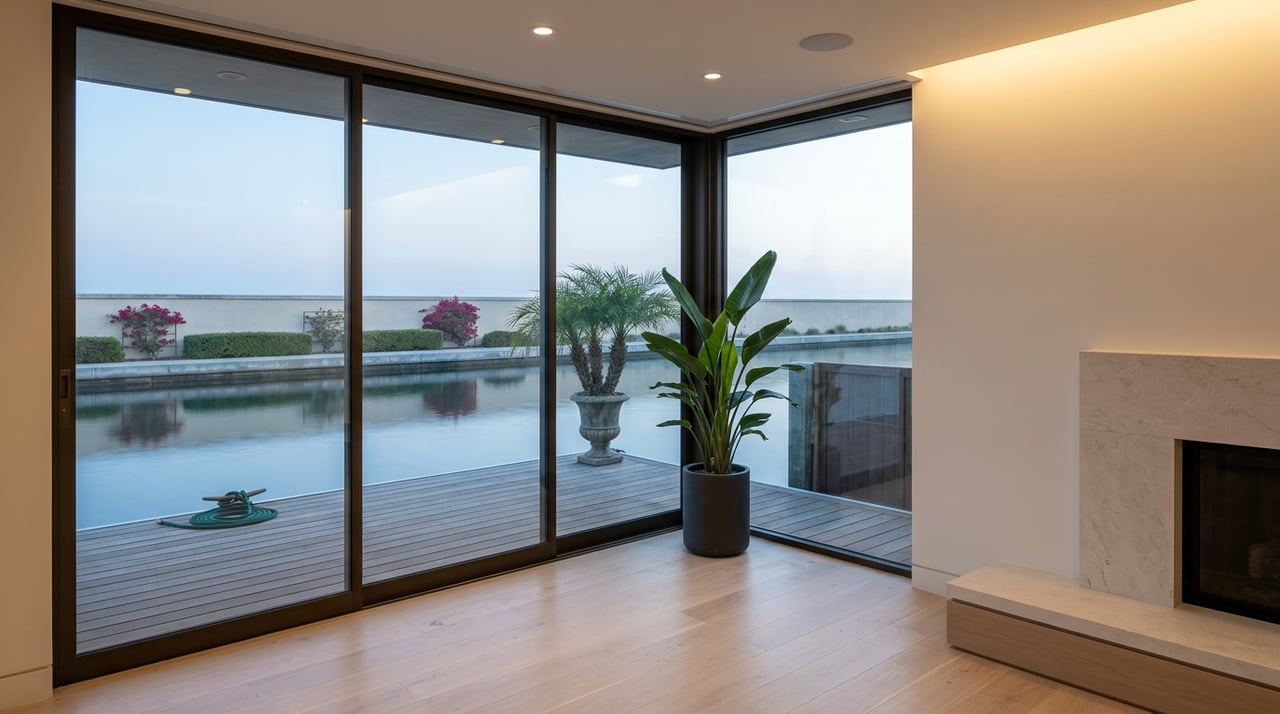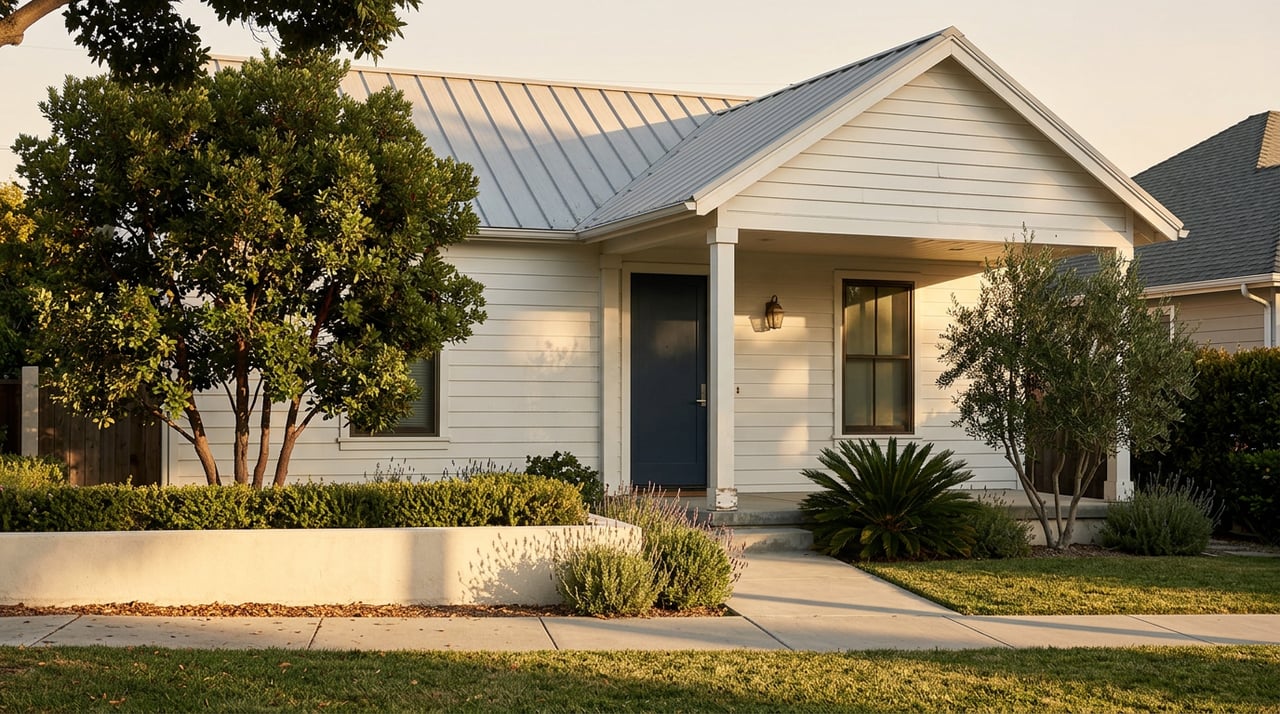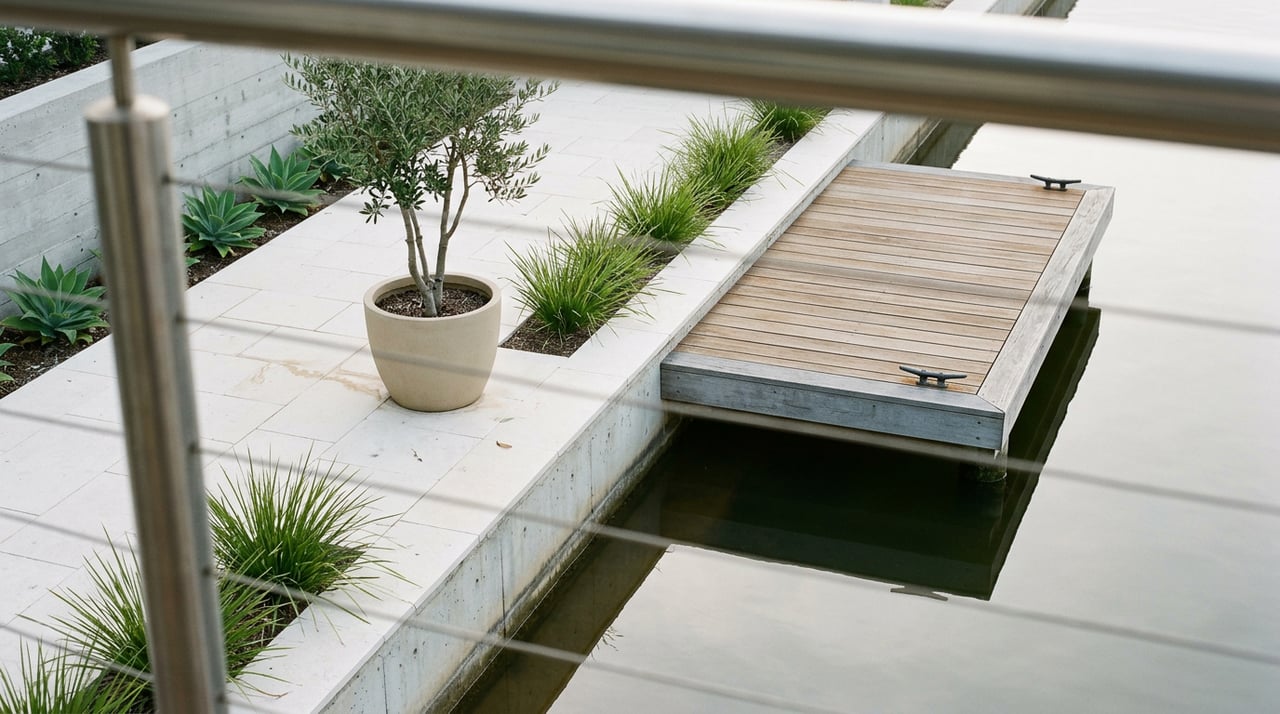
Picture two listings in the Cays, priced within striking distance of each other. One sits in Mardi Gras Village, backyard opening straight onto the bay, downtown San Diego lit up across the water every evening. The other sits a few streets over in Port Royale, similar square footage, similar year built. The Mardi Gras home has no boat dock. It can't. The water along that stretch is too shallow. The Port Royale home comes with a private slip that will hold a real boat. Same price range, same "waterfront" label on the listing sheet, two completely different products.
That gap is the thing a spreadsheet won't show you, and it's the reason comparing Coronado Cays to the rest of the island on price per square foot alone will lead you to the wrong conclusion.
The "discount" that isn't one
Anyone cross-shopping Coronado's three markets eventually runs the same math: pull the average price per square foot for Coronado Cays, stack it against Coronado Shores or the Village, and the Cays comes out looking like the value play. Citywide numbers for 2025 back that impression up on the surface. Coronado's average sale price across 276 closed transactions that year came to roughly $3.02 million, or about $1,557 per square foot, with Coronado Shores and recently upgraded coastal properties posting some of the highest per-foot figures on the island.
Here's the part that gets skipped: Coronado Cays homes traded at lower price-per-square-foot levels largely because the homes themselves are bigger, not because they're worth less per foot of comparable living space. A 3,600-square-foot detached home with a private dock and a two-car garage is a different animal than a 1,400-square-foot high-rise unit in the Shores, even when the sticker prices land in the same neighborhood. Dividing total price by square footage flattens that difference into a single number that looks like a discount and isn't one.
As of late July 2026, the Cays carried a median list price near $2.86 million with an average around $1,247 per square foot, while closed sales in the first quarter of 2026 averaged just under $2 million through San Diego MLS reporting. Condo product in the Cays has traded in a $799 to $1,127 per-square-foot range. None of those numbers tell you whether the home behind them can tie up a boat.
What actually moves the price inside the Cays
The community's homeowners association describes Coronado Cays as roughly 1,200 condos, townhomes, and custom homes spread across ten planned villages, with more than 600 boat slips among them. That ratio matters. Six hundred slips for twelve hundred residences means a meaningful share of homes here were never going to come with private dock access in the first place, regardless of how close they sit to the water.
The villages break down like this, based on how each one was built and marketed:
- Antigua Village — mixed condos and townhomes, with private slips attached to specific units (a recent 3-bedroom listing there came with a 37-foot slip)
- Bahama Village
- Blue Anchor Cay — single-family homes along Blue Anchor Cay Road and Buccaneer Way
- Green Turtle Cay — large custom-built homes, many with private boat docks and open bay views
- Jamaica Village
- Kingston Village — townhouses, many waterfront with private boat slips
- Mardi Gras Village — a residential enclave where bayfront units face downtown San Diego but shallow water rules out boat docks entirely
- Montego Bay Villas — a gated condo community of roughly 82 units adjacent to Loews Coronado Bay Resort, with its own pool, tennis courts, and clubhouse
- Port Royale — single-family homes, many featuring private docks, on quiet cul-de-sacs
- Trinidad Village
The pattern that shows up across the documented listings: homes on the main channels and the outer edges of the lagoons get real depth, deep enough for serious vessels, while interior canals run shallower and suit kayaks, paddleboards, or small runabouts better than anything with real draft. Mardi Gras Village is the clearest example of what that means in practice. Its bayfront units carry some of the best unobstructed views in the Cays, and still can't support a dock, because the water simply isn't deep enough where the lots meet the shoreline.
Three ways to end up with water access, and they are not the same asset
When a listing says "boat slip included," it's worth asking which of three arrangements is actually in play, because they carry different weight at resale.
A deeded slip attached to the parcel. This is the strongest position. The dock is part of the property, transfers with the sale, and shows up in the title work. Homes in Port Royale, Kingston Village, Green Turtle Cay, and parts of Antigua Village commonly fall into this category.
A leased community slip through the HOA. Some interior canal properties don't own a slip outright but can lease one from the association's shared inventory when a slot opens up. Availability has been described as hit or miss, which means a buyer counting on this option should verify current wait times before assuming it as part of the deal, not after closing.
Membership access through the Coronado Cays Yacht Club. Founded in 1972, the club operates a 58-slip marina along with a clubhouse, restaurant and bar, pool, spa, and bocce courts. Club access comes bundled with property ownership in the Cays, but the dining room and bar are for members and their guests only, and the 58 slips there serve the club membership generally rather than functioning as a deeded extension of any one home.
These aren't interchangeable when you're pricing a purchase. A deeded slip is collateral. A leased slip is a maybe. Club access is a lifestyle perk, not a place to park a 45-foot boat on a permanent basis.
Docks are infrastructure, not just a listing feature
There's a detail that makes this concrete rather than theoretical. State environmental review records filed earlier this year describe a floating dock replacement and pile relocation project in the Cays, with construction originally targeted for early 2026 and expected to take about two weeks once crews mobilized. Getting there required clearing the water for Caulerpa, an invasive marine algae California regulators watch closely, through two separate surveys spaced roughly two months apart before any bottom-disturbing work could begin. That sequencing isn't unusual for dock work anywhere along the California coast, but it's a useful reminder that a dock isn't a static amenity sitting quietly behind a house. It's engineered infrastructure sitting in a regulated waterway, subject to the same permitting, inspection, and replacement cycles as any other coastal structure. When you're comparing two "waterfront" listings, you're also comparing two different pieces of infrastructure with two different maintenance and permitting histories, even if neither seller mentions it.
What this means if you're comparing neighborhoods, not just homes
If you're set on the Cays because you want to keep a real boat behind your house, the villages built around the main channels and lagoon edges, Port Royale, Kingston Village, Green Turtle Cay, and the slip-bearing sections of Antigua Village, are where that plan holds up. If the view matters more than the dock, Mardi Gras Village and the interior canal streets deliver waterfront living at a lower price point precisely because the water access is more limited, and that tradeoff is worth pricing in deliberately rather than discovering during escrow.
Compare that against Coronado Village or Coronado Shores and the calculation changes again. The Village trades walkability and architectural range for less water frontage per home. The Shores trades private dock access entirely for resort-style amenities and a lower-maintenance ownership model. None of these three markets is a discount version of another. They're three different products wearing the same ZIP code.
FAQ
Does every home in the Coronado Cays come with a boat slip? No. Roughly 600 slips exist across about 1,200 residences in the community, and several villages, Mardi Gras among them, sit on water too shallow to support a dock regardless of price point. Always confirm slip status and depth for the specific parcel rather than assuming it from the neighborhood name.
Can I add a dock to a home that doesn't currently have one? Sometimes, and it depends on water depth, HOA rules for that specific village, and state and local permitting, which recent dock work in the Cays shows can involve multi-step environmental surveys before construction begins. This is a question worth raising with the HOA and a marine contractor before writing an offer contingent on adding one.
If my slip is leased rather than deeded, does that affect what I can ask at resale? It can. A deeded slip is a transferable asset that shows up in title. A leased community slip depends on the association's current availability and terms, which buyers should verify independently rather than treating as guaranteed. Working through the difference with a local advisor before listing helps set expectations correctly from the start.
If you're weighing a Coronado Cays purchase or getting ready to list one, the difference between a deeded dock, a leased slip, and yacht club access is exactly the kind of detail that belongs in the pricing conversation from day one. The Morabito Group works these villages block by block. Request a personalized Coronado market consultation and we'll walk through what your specific water access is actually worth, or browse current Coronado Cays homes for sale to see how this plays out in today's listings.