Wondering whether a Coronado Village cottage or a more contemporary home is the better fit for your life? It is a smart question, especially in a small coastal city where architecture, lot placement, and local design standards shape how a home feels every day. If you are weighing charm against convenience, this guide will help you compare the two through the lens of Coronado’s village setting, ownership considerations, and long-term value. Let’s dive in.
Why Coronado Village feels different
Coronado is a small seaside city with what the city describes as an ocean-village feel. It spans 13.5 square miles, sits between San Diego Bay and the Pacific Ocean, and has about 23,000 residents. Everyday life here is shaped by beaches, bike and walking paths, 18 public parks, and year-round sunshine.
That setting helps explain why home style matters so much in Coronado Village. The city’s planning goals focus on preserving village character, encouraging development that fits its surroundings, and protecting historic and architecturally important structures. In practical terms, buyers often notice not just the house itself, but also how it meets the street, uses outdoor space, and fits on the lot.
Most residential blocks also share a fairly consistent pattern. Coronado’s historic context work notes that many homes have a uniform setback, and lot sizes commonly range from 3,500 to 7,500 square feet. That makes porch placement, yard layout, privacy, and curb presence especially important when you compare older cottages with newer or more contemporary homes.
What defines cottage charm
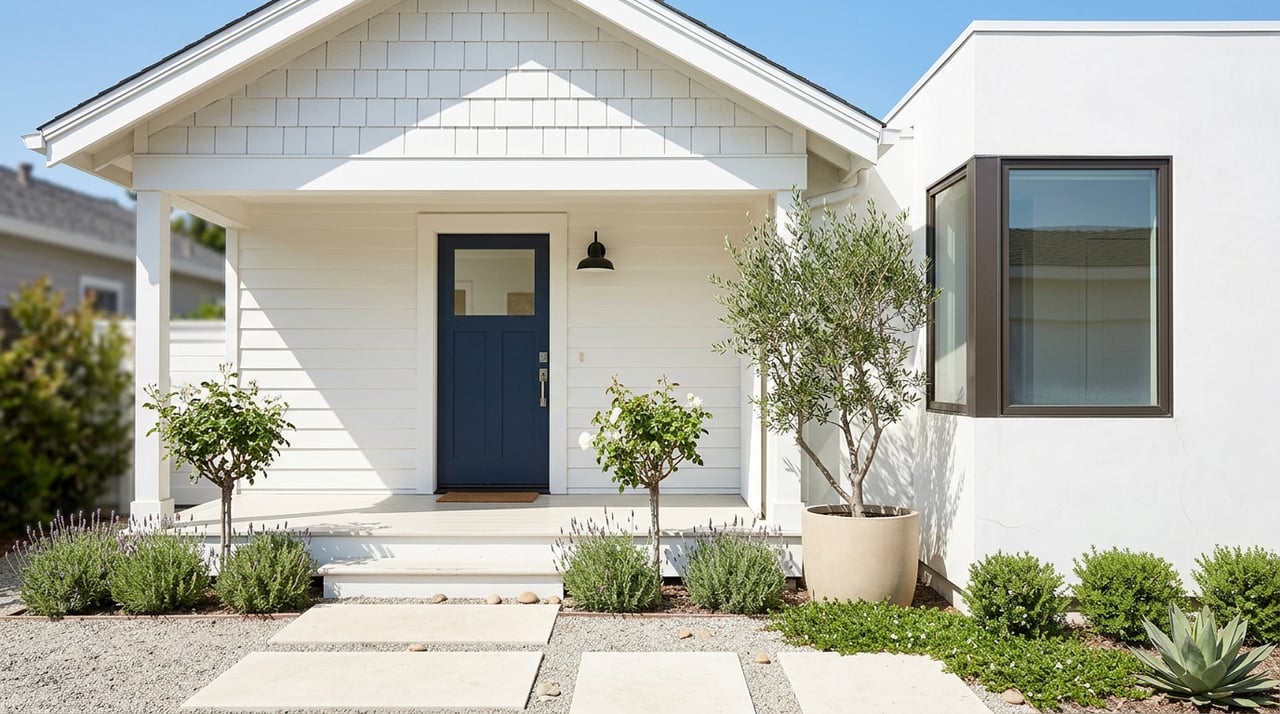
In Coronado Village, cottage charm usually starts with scale and architectural detail. Many classic cottages feel intimate, welcoming, and connected to the street. Instead of relying on large interior volume, they often create character through porches, rooflines, and a strong relationship between indoor and outdoor living.
The city identifies California Bungalows as one- to one-and-a-half-story homes with sloping roofs, exposed rafters, dormers, and prominent porches. Beach Cottages are described as small, modest homes with gable roofs, generous wood cladding, and Craftsman influence. Across Coronado’s residential fabric, you also see Victorian, Craftsman, and English Cottage-related styles, along with other common historic-era styles like Spanish Colonial Revival, Mediterranean Revival, Tudor Revival, and Craftsman.
For you as a buyer, that often means a home with a distinct personality from the moment you arrive. The porch may feel like part of the living space. The front yard and walkway may create a softer edge to the street. Original site planning and preserved exterior details can make a cottage feel especially rooted in Coronado’s long-established neighborhood pattern.
Cottage features buyers often notice
- Prominent front porches
- Sloping or gabled rooflines
- Exposed rafters or dormers on some homes
- Smaller-scale rooms and a more intimate layout
- A stronger visual connection to the street and front yard
- Preserved original details that reinforce character
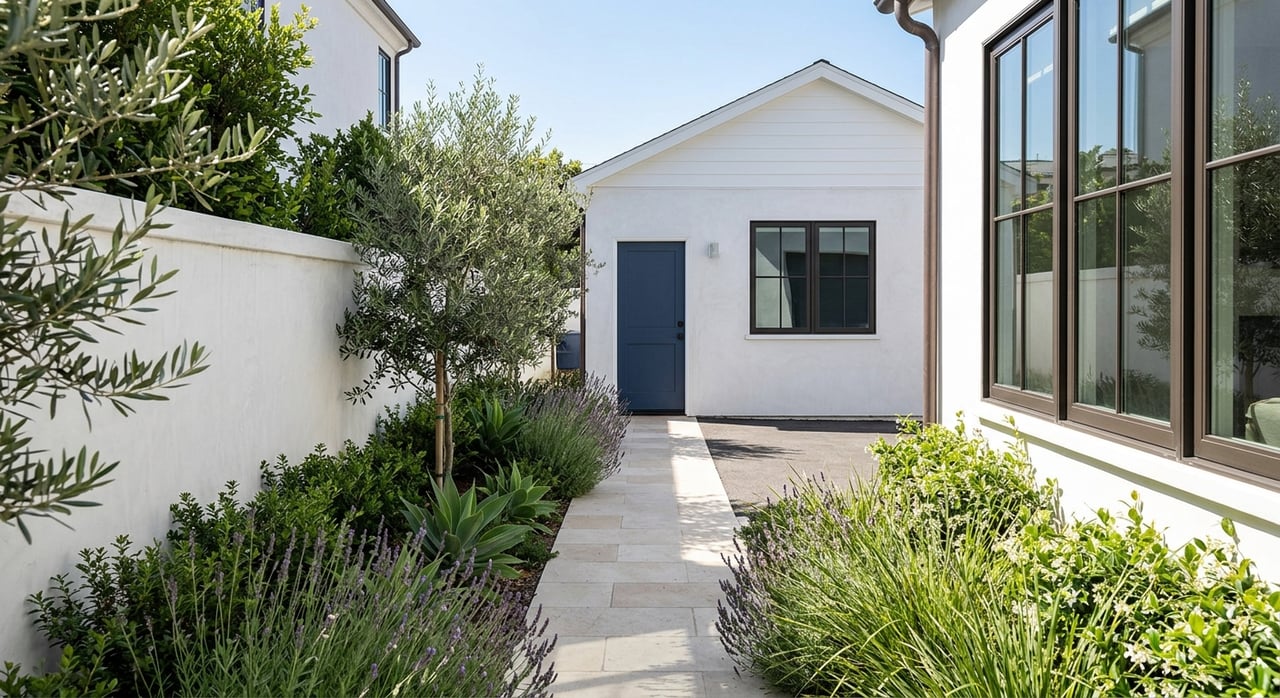
Another part of cottage appeal is how the home sits on the lot. Coronado’s design guidance discourages parking in residential front-yard setbacks and prefers access from alleys or secondary streets when possible. That supports the traditional porch-and-landscape street edge many buyers associate with classic Village charm.
What defines contemporary living
Contemporary homes in Coronado usually offer a different kind of appeal. They tend to be more streamlined, less ornamented, and visually simpler from the street. In many cases, that design language supports a brighter and more open interior feel.
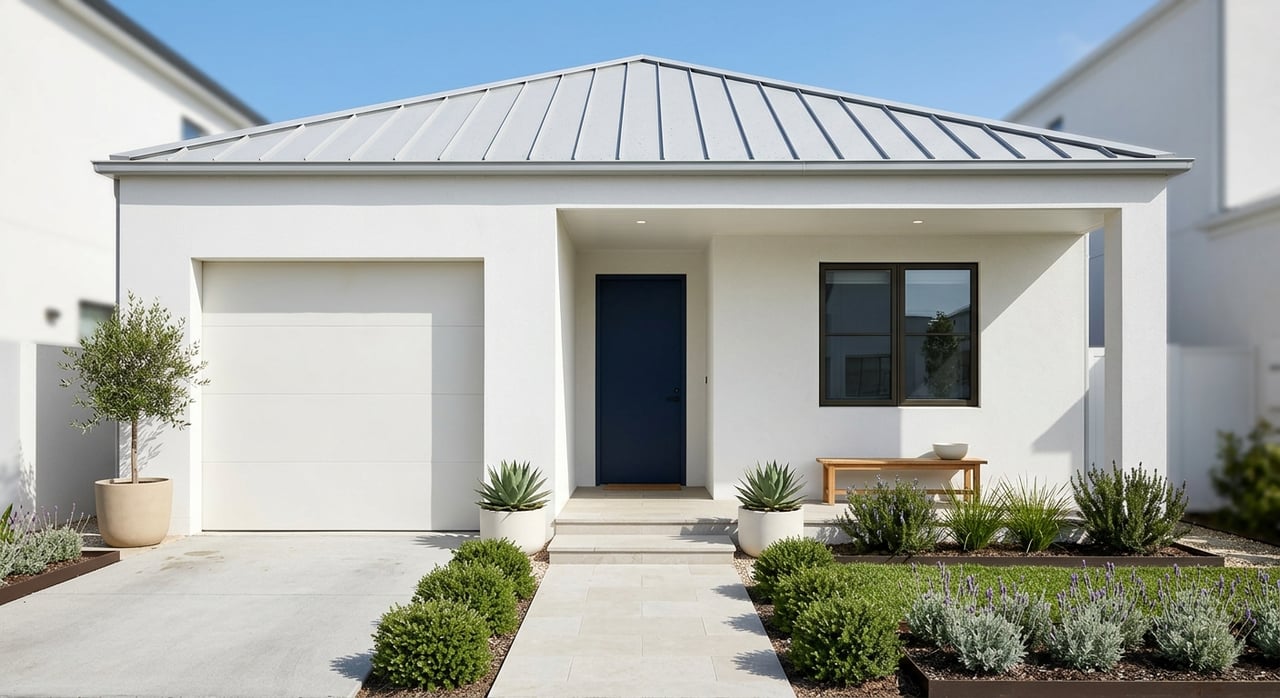
The city describes Contemporary homes as having asymmetrical façades, low-sloped roofs, wide eaves, recessed entries, expansive wall planes, and a mix of materials such as wood, brick, glass, and concrete block. Mid-Century Modern examples add low, horizontal proportions, flat or hidden roofs, post-and-beam construction, simple windows, plain doors, and larger window groupings.
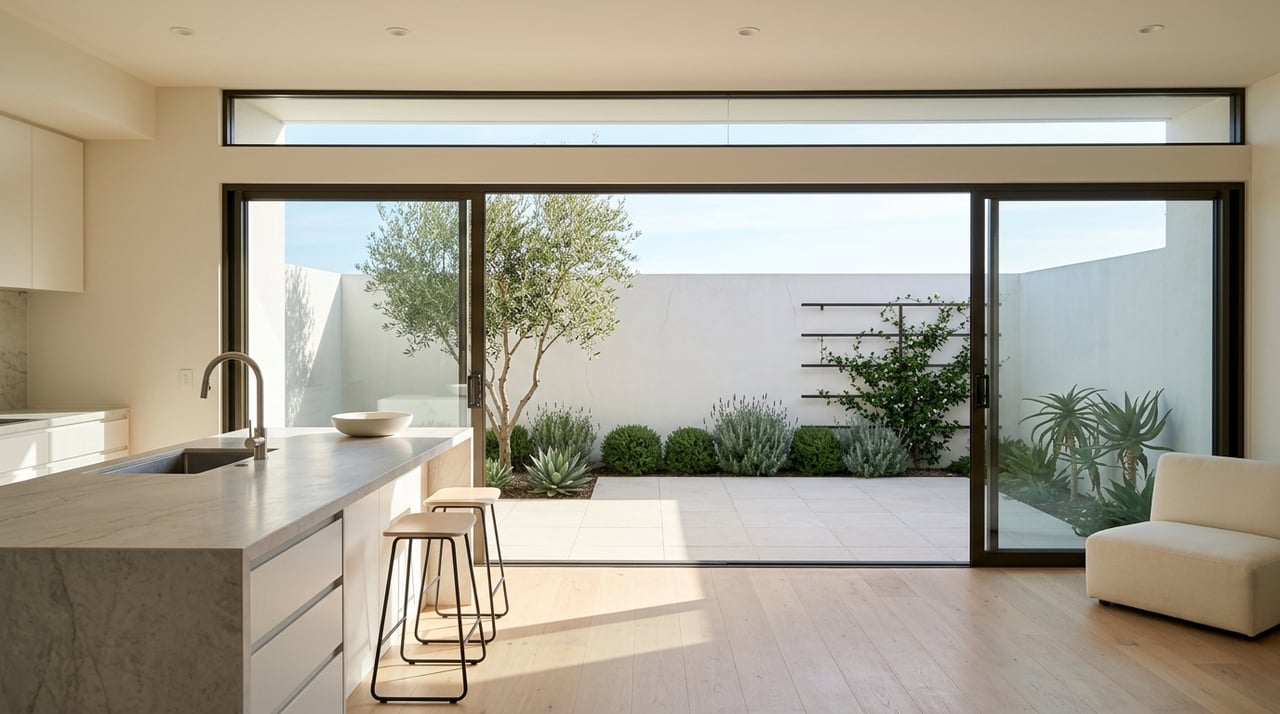
For daily living, this often translates into a home that feels more flexible. You may find sightlines that are longer, rooms that flow more easily, and a layout that supports entertaining or a more open routine. The exact floor plan always depends on the property, but the overall design tends to prioritize simplicity, light, and a more expansive feel.
Contemporary features buyers often notice
- Streamlined exterior design
- Larger window groupings
- Lower, more horizontal proportions
- Recessed entries and simpler detailing
- Mixed materials and broad wall surfaces
- Interiors that often feel brighter and more open
At the same time, contemporary does not mean disconnected from its surroundings. Coronado’s design review applies to new construction and exterior remodels, and the city’s goals ask new work to fit the neighborhood rather than overpower it. That is an important distinction in a place where village scale is part of the appeal.
Cottage charm vs contemporary living
If you are deciding between the two, it helps to think beyond style alone. The real question is how you want the home to support your day-to-day life, future plans, and comfort with potential design oversight.
| Consideration | Cottage Charm | Contemporary Living |
|---|---|---|
| Overall feel | Intimate, porch-centered, character-rich | Open, streamlined, flexible |
| Street presence | Often visually connected to the street | Often more inwardly composed but still neighborhood-sensitive |
| Architectural detail | Higher emphasis on original features and craftsmanship | Lower ornamentation, cleaner lines |
| Indoor-outdoor relationship | Often tied to porch, yard edge, and traditional site planning | Often tied to light, glazing, and open living patterns |
| Update flexibility | May involve more review if historic status applies | Often offers more freedom for future updates, subject to city design standards |
For some buyers, a cottage feels special because no two are quite alike. For others, a contemporary home better supports how they live now, especially if they want a layout that feels more open and adaptable. Neither is automatically better. The right choice depends on what matters most to you.
Ownership questions that matter most
Before you fall in love with a style, it is worth asking a few practical questions. In Coronado, those questions can affect renovation plans, resale strategy, and how confidently you move forward.
One of the biggest is whether a home is a designated historic resource or simply an older house. Coronado requires a Historic Resource Alteration Permit for any exterior modification to a designated historic resource. The city also uses a Determination of Historic Significance Review when certain older homes lose original street-visible features.
That does not mean historic homes are harder to own. It means you should understand the level of review before planning exterior changes. A well-preserved cottage can be especially appealing because original details and site relationships are part of what buyers value.
Designated historic residential resources may also qualify for Mills Act property-tax relief. For some owners, that can be a meaningful factor in the long-term cost picture. For others, the larger issue is balancing preservation with future flexibility.
Questions to ask before you buy
- Is the home a designated historic resource?
- What exterior changes would require city review?
- How much original character is still intact?
- Does the layout fit your routine, entertaining style, or space needs?
- How does the house sit on the lot?
- How much outdoor area feels private versus street-facing?
These questions are helpful whether you are buying a cottage or a contemporary home. They keep your focus on how the property functions in real life, not just how it photographs.
How resale value fits into the decision
Coronado remains a high-value market, which raises the stakes when you choose the right home style. Redfin reported a median sale price of $2.86 million over the three months ending April 2026. Realtor.com described Coronado as a balanced market in March 2026, with a median listing price of $3.20 million and a 95% sale-to-list ratio.
In that kind of market, both property types can attract strong interest. A classic cottage can stand out when it has preserved character, thoughtful upkeep, and a strong fit with Village expectations. A contemporary home can stand out when it feels bright, functional, and well integrated into the surrounding block.
Resale often comes down to alignment. Buyers tend to respond well when a home’s design, condition, lot use, and neighborhood presence all feel consistent. In Coronado, that means a charming cottage should feel authentic, and a contemporary home should feel thoughtful rather than oversized or out of place.
Which style may fit your lifestyle
If you love architectural personality, a strong sense of place, and the idea of living in a home with visible history, a Village cottage may be the better match. You may value porch living, preserved details, and a home that feels woven into Coronado’s established streetscape.
If you prefer simpler lines, a more open feel, and a layout that may better support modern routines, a contemporary home may make more sense. You may appreciate larger window groupings, cleaner finishes, and spaces that feel easier to adapt over time.
The best decision usually comes from seeing the tradeoffs clearly. Charm and convenience are not opposites in Coronado, but they do show up differently depending on the home. When you understand how style, design review, and lot placement work together, you can buy with more confidence.
Whether you are drawn to a storybook cottage or a cleaner contemporary look, the right guidance can make the choice much easier. If you want help comparing properties, understanding Village nuances, or building a smart buying or selling strategy in Coronado, reach out to The Morabito Real Estate Group.
FAQs
What makes a Coronado Village cottage different from a contemporary home?
- A Coronado Village cottage usually emphasizes smaller scale, porch-centered design, and preserved architectural detail, while a contemporary home typically features cleaner lines, broader wall planes, larger window groupings, and a more open feel.
What should buyers ask about historic status in Coronado?
- Buyers should ask whether the home is a designated historic resource, what exterior changes may require city review, and how much original street-visible character has been preserved.
What exterior changes can trigger review for older Coronado homes?
- Coronado requires a Historic Resource Alteration Permit for exterior changes to designated historic resources, and certain older homes may also be subject to a Determination of Historic Significance Review when original street-visible features are removed.
How does lot layout affect home choice in Coronado Village?
- Lot layout matters because many Village blocks have uniform setbacks and common lot sizes, so the home’s relationship to the street, porch area, yard edges, and private outdoor space can shape how the property feels and functions.
Is Coronado a strong market for both cottages and contemporary homes?
- Yes. In Coronado’s high-value, balanced market, both well-kept cottages and thoughtfully designed contemporary homes can appeal to buyers when they match lifestyle needs and fit the city’s village-scale expectations.