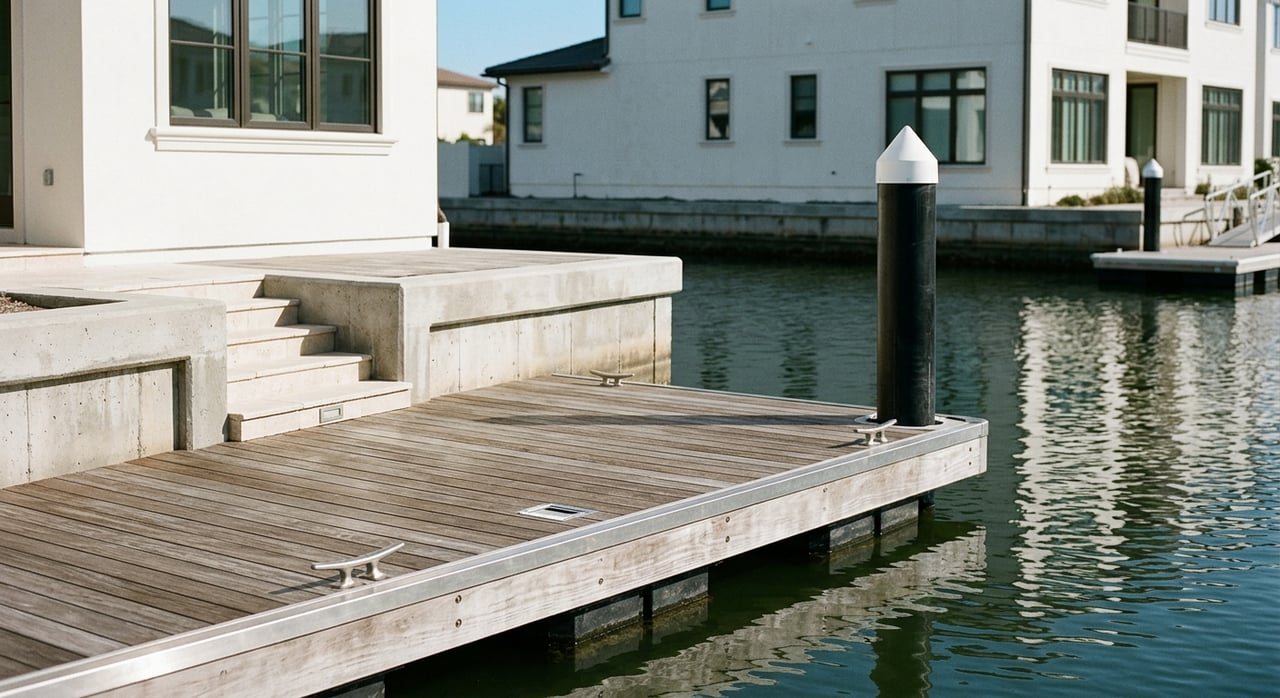
Looking at waterfront homes in Coronado Cays and wondering which village fits the way you actually want to live? That is a smart question, because the Cays is not one uniform waterfront community. Each village has a different mix of home types, dock access, shared amenities, and shoreline conditions, and those details can shape your day-to-day experience. If you want a clearer way to compare the options before you buy or sell, this guide will help you sort through the differences. Let’s dive in.
Why Coronado Cays villages feel different
Coronado Cays is a planned residential marina community on the Silver Strand, between San Diego Bay and Silver Strand State Beach. The HOA describes the community as having about 1,200 condos, townhomes, and custom homes with more than 600 boat slips. The City of Coronado also notes that the Cays is built out, with little capacity for additional residential development.
That matters because village differences are not just cosmetic. In the Cays, the way each area meets the water, where docks are placed, what type of homes are built there, and which amenities are shared all create distinct waterfront living patterns.
Best way to compare Cays villages
If you are trying to compare villages in a practical way, four factors matter most:
- Whether slips are assigned or docks may be rented
- Whether the homes are condos, townhomes, or single-family residences
- Which clubhouse and pool serve that village
- Whether the shoreline setting feels more private, public, or mixed
These are useful filters because the HOA applies different rules by village and, in some cases, by home type within the same village. That means two waterfront homes in the Cays can offer very different ownership experiences.
Slip-forward villages: Antigua and Kingston
Antigua and Kingston stand out as the most slip-centered villages in the Cays. HOA rules state that association-owned docks serve Antigua, Jamaica, and Kingston, and that Antigua and Kingston condominium slips are permanently assigned to specific units.
For buyers who want a more direct connection between the residence and boating setup, that is a meaningful distinction. The handbook also allows features such as dinghy or jet-ski docks, anti-fouling tubs, Hydro Hoists, and boarding steps on certain docks, reinforcing the idea that these villages are especially boat-oriented.
From a home-type perspective, Antigua and Kingston are also more condo-centric than some of the other villages. If your priority is an easier-to-compare condominium ownership structure paired with strong dock identity, these two villages often rise to the top of the list.
Flexible dock access: Jamaica
Jamaica offers one of the most flexible dock arrangements in the Cays. According to the HOA handbook, Jamaica docks may be rented to any Cays resident or owner with HOA approval, and Jamaica residents receive priority.
That setup can appeal to buyers who want boating access but prefer more flexibility than a permanently assigned slip model. It may also be useful for owners who value options within the broader Cays community rather than a dock structure tied only to one unit.
Jamaica also has a shoreline feature that is unique in the HOA rules: a private beach in Lot 90 reserved for Jamaica residents and their accompanied guests. That gives Jamaica a different waterfront feel from villages where the shoreline experience is shaped more by bulkheads, docks, or shared bay-edge conditions.
Condo-focused waterfront living: Montego and Mardi Gras
Montego is identified as a waterfront-villa condominium village, and the HOA rules place more attention on residential features like balconies, landings, garages or carports, and shared clubhouse or pool use. Compared with Antigua or Kingston, Montego reads more as a condo-first waterfront option.
For some buyers, that can be a plus. If you want a waterfront setting but are focused more on the residence format and shared amenities than on a slip-centered layout, Montego may feel more aligned with your goals.
Mardi Gras is also strongly condo-oriented, though it includes patio-home and townhome subtypes. Its waterfront edge is especially important to understand because the HOA handbook notes that the intertidal beach adjacent to the Mardi Gras bulkhead has public access.
That does not make it less waterfront. It simply means the shoreline condition differs from a more private-feeling edge, and that difference can affect how the village feels in everyday use.
Single-family and townhome villages
The HOA identifies the Village Residence Zone as consisting of single-family homes in Jamaica, Bahama, Trinidad, and Port Royale, while townhomes in those villages are governed separately. This is one reason the Cays offers such a wide range of waterfront lifestyles even within a relatively compact area.
If you are looking for a more traditional detached-home feel, these villages are worth close attention. HOA rules also allow some homes in this category to expand vertically or over garages within the original footprint logic, which may matter if you are evaluating long-term flexibility.
Bahama
Bahama is the clearest townhouse-oriented area in the HOA materials. City and HOA rules discuss rear-yard decks and patios in the Village Townhome Zone and connect that language directly to Bahama Village.
If your search is centered on townhome living with outdoor space considerations, Bahama deserves a closer look. Its setup can feel different from the more condo-centered villages, even though both may offer waterfront access.
Trinidad
Trinidad includes both single-family and townhome elements. The handbook specifically references roof-deck spa limits on single-story townhomes with zero-lot lines, which gives a helpful clue about the compact townhome component found there.
That mixed character can appeal to buyers who want options within one village. It also means that review of the specific home type is especially important when comparing one Trinidad property to another.
Port Royale
Port Royale is another mixed village. The HOA distinguishes detached homes from attached homes in Port Royale when discussing paint-change approvals, which confirms that both forms are present.
This kind of variation can be attractive if you want to compare attached and detached living within a similar area of the Cays. It also reinforces why village-level labels only tell part of the story.
Amenity-light waterfront areas
Green Turtle Cay and Blue Anchor Cay are treated differently in the HOA handbook than many of the main condo and village-residence areas. They have separate wharfage paint rules, distinct lighting-maintenance treatment, and their assessments do not support a pool.
In practical terms, these two areas read as the least amenity-heavy waterfront parts of the Cays. For some buyers, that may be a drawback. For others, it may be part of the appeal if they are looking for a simpler ownership profile focused more on the waterfront setting itself.
Clubhouses and pools shape daily life
One of the easiest details to overlook is how village-specific amenities influence the feel of each area. In Coronado Cays, clubhouse access follows village membership rather than operating as one shared system for all neighborhoods.
The HOA lists these clubhouse groupings:
- Bahama and Antigua share a clubhouse
- Jamaica has its own clubhouse
- Trinidad and Kingston share a clubhouse
- Montego has its own clubhouse
- Mardi Gras and Port Royale share a clubhouse
- The Grand Caribe Room is open to all Cays residents
The Grand Caribe Room is the largest resident clubhouse space, with a listed capacity of 150 people. By comparison, the Mardi Gras and Port Royale clubhouse is listed at 40 people, which gives you a sense of how gathering spaces differ across the community.
Pool access also follows village membership:
- Jamaica uses the Jamaica pool
- Antigua and Bahama share a pool
- Trinidad and Kingston share a pool
- Montego has its own pool
- Mardi Gras and Port Royale share a pool
- Blue Anchor and Green Turtle do not have pool-supported assessments
These details matter more than many people expect. If you spend a lot of time using shared amenities, the village assignment can have a real effect on your everyday routine.
Shoreline feel matters as much as the view
In Coronado Cays, not all waterfront edges function the same way. Jamaica is the only village specifically identified in the HOA handbook as having a private beach for residents and accompanied guests.
Mardi Gras, by contrast, includes a bay-side intertidal beach adjacent to the bulkhead that has public access. Both are waterfront environments, but they create very different experiences.
This is why a buyer should look beyond words like waterfront or bayfront. The better question is how that stretch of shoreline is actually used and regulated in the specific village you are considering.
A simple way to narrow your search
If you want a quick buyer-facing framework, the Cays can be viewed like this:
- Most slip-forward: Antigua and Kingston
- Most flexible dock access: Jamaica
- Most townhouse or single-family oriented: Jamaica, Bahama, Trinidad, and Port Royale
- Most condo-centric: Antigua, Kingston, Montego, and Mardi Gras
- Most amenity-light: Green Turtle Cay and Blue Anchor Cay
That kind of sorting can save you time. It helps you focus on the villages that match your priorities instead of treating the entire Cays as one category.
Why village knowledge matters when buying or selling
For buyers, village differences can shape everything from your boating setup to your amenity access and shoreline experience. A home that looks similar on paper may offer a very different ownership pattern depending on its village and home type.
For sellers, understanding these distinctions helps position a property more accurately. The right marketing story is often not just about square footage or views. It is about how that home lives within its specific part of Coronado Cays.
If you are comparing villages, evaluating a waterfront purchase, or planning to position a Cays property for sale, working with hyperlocal guidance can make the process much clearer. For personalized insight on Coronado Cays waterfront living, connect with The Morabito Real Estate Group.
FAQs
What makes Coronado Cays villages different for waterfront living?
- The biggest differences are dock setup, home type, shared clubhouse and pool access, and whether the shoreline feels more private, public, or mixed.
Which Coronado Cays villages are best for assigned boat slips?
- Antigua and Kingston are the most slip-forward villages, with condominium slips permanently assigned to specific units.
Which Coronado Cays village offers the most flexible dock access?
- Jamaica offers the most flexible dock arrangement because its docks may be rented to any Cays resident or owner with HOA approval, with priority for Jamaica residents.
Which Coronado Cays villages are more condo-oriented?
- Antigua, Kingston, Montego, and Mardi Gras are the most condo-centric villages based on the HOA framework and village rules.
Which Coronado Cays villages have more single-family or townhome options?
- Jamaica, Bahama, Trinidad, and Port Royale are the most oriented toward single-family homes or townhomes, though some villages include a mix of attached and detached housing types.
Do all Coronado Cays villages have the same pool and clubhouse access?
- No. Pool and clubhouse access is village-specific, and Blue Anchor Cay and Green Turtle Cay do not have pool-supported assessments.
Which Coronado Cays village has a private beach?
- Jamaica is the only village specifically identified in the HOA handbook as having a private beach for residents and their accompanied guests.
Is there public shoreline access in any Coronado Cays village?
- Yes. The HOA handbook notes that the intertidal beach adjacent to the Mardi Gras bulkhead has public access.